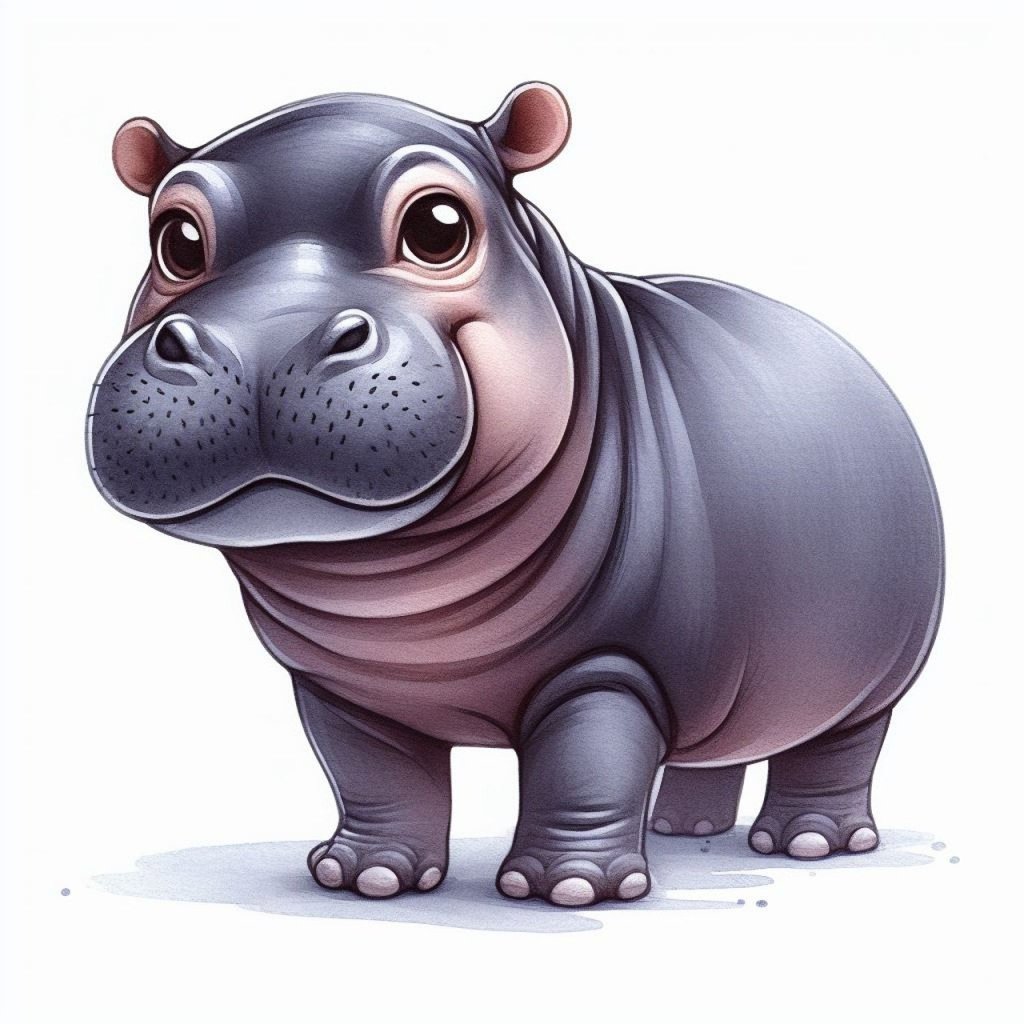
If A Hippopotamus Can Fly: Why, oh why, can’t I?

News item: “…researchers discovered that hippopotamuses — which can weigh up to 8,000 pounds — become airborne with all four feet off the ground for up to 15 percent of the time while running at full speed, or for about 0.3 seconds.” (The Week, July 19, 2024)

I reckon I was airborne for about 0.003 seconds before my recent bone-shattering crash on a Seattle sidewalk. I weigh — well, a lot less than 8,000 pounds — and I had only one foot off the ground at a time as I walked at a reasonable pace. Yet there I was, flattened, while the hippopotamus continues to soar through the air. It’s a miscarriage of justice —an unequal application of the law of gravity.

Gravity is out to get us humans. We teeter around on two legs, at a distinct disadvantage to four-legged critters. Scientists tell us that our long-ago ancestors switched from four- to two-legged travel to save calories. We use less energy when walking than our relatives, the chimpanzees, who employ both knuckles and toes as they stride through the jungle. 

The World Health Organization reports that globally, 684,000 people die from falls each year. In this country, says the Center for Disease Control, falls are the leading cause of injury for adults 65 years or older and, even more frightening, the leading cause of injury-related death in that same age group. 

My friends and family offered all sorts of kindly advice during my two-week hospital stay, followed by a few days in rehab, and now as I continue therapy at home. “You don’t want to fall again,” they lovingly caution. Fact is, I didn’t want to fall in the first place. I’ve long been pro-active to avoid falling. I own and used a balance board; I stood on one leg while brushing my teeth; I continually engaged in core strengthening exercise; I wore sturdy walking shoes, and just FOUR DAYS before my fall, I completed a balance/fall-prevention class. 

“Perfect score,” the instructor told me, happily adding: “but of course, you had a perfect score at the start.”

The reasons we fall are complex. The CDC lists lower body weakness, vitamin D deficiency, difficulties with walking and balance, medications that affect balance, vision problems, foot pain or poor footwear, home hazards or dangers such as broken or uneven steps, throw rugs or clutter, etc. In my case, it was an uneven bit of concrete sidewalk. Gravity happens.

Reading through the CDC brochure, “Staying Independent,” I checked a definite “yes” next to the statement, “I am worried about falling.” The brochure commentary is not particularly helpful: “People who are worried about falling are more likely to fall.”

In his book “Falling Upward,” spiritual writer Richard Rohr offers a more encouraging point of view. In this “second half” of life, he suggests, we are free to fall, although not in a physical sense. We no longer have to protect our fragile egos, no longer must we “push the river,” no longer must we strive to have what we love, instead, we love what we have. Rohr cites St. Francis, who “spent his life falling, and falling many times into the good, the true, and the beautiful.” I’m willing to take that kind of fall.

I’m convinced my fall prevention work saved me from worse injuries and speeded my recovery. The CDC says one in every four older adults reports falling each year. I count as one this year, which means three others are off the hook. I hope, dear reader, you’re among the three.

What Goes Around

I’m down for the count, if someone could just figure out what the count is. I’m on Day Eight of whatever-is-going-around. A friend told me another friend told her this stuff hangs on for twelve days. Great. The Twelve Days of Crudness.

“On the first day of Crudness, my true love brought to me, a carton of nose tissues!” On the second day, two bottles of cough syrup. Third day, three gallons of chicken soup. No, wait! Adding insult to injury, while I was slurping chicken soup an upper left molar cracked and crumbled. The dentist’s office asked if I was taking anything for the pain. The stupid tooth is the only part of my body that DOESN’T hurt, I answered. They’ll try to get me in before Christmas.

Whatever is bugging so many of us is apparently a multiplicity of infectiousness. I’m fully boosted against Covid and consistently test negative. I got my flu shot. Still I wheeze and sneeze. My cough sounds like a Washington State ferry signaling distress. I have no fever, yet no energy and even less motivation. Further assaulting my otherwise cheerful facade was a headline in the Washington Post: “How a viral siege is making some people sick for weeks, even months.”

The article lists all the stuff that’s going around: “Parainfluenza, respiratory syncytial virus, rhinovirus, adenovirus, influenza A and influenza B. Respiratory enterovirus and human metapneumovirus, too. And then, there’s the rebounding coronavirus …”

I’d been feeling particularly sorry for myself because this is the second time this year I’ve been flattened by an extreme version of what we used to call the “common cold.” But the article cites a CDC determination that normal adults can hit the mat two or three times a year and still be considered healthy overall.

Enough of my wheezy whining. For me this has been an uncomfortable inconvenience. For too many it’s deadly serious. Yesterday the daughter of a dear friend called to tell me her mom is under hospice care, deeply sedated, death imminent. She wanted me to know in advance so I could be “with” her mom in these final hours, even though I’m a hundred and fifty miles away.

Life on the edge of thin ice

In truth her mom is with me. She was a frequent visitor for many years, especially during the holidays, exuberant over being here by the river. With her in my heart, I’ve been watching the spectacle of life and drama of death that unfolds especially now with the river partially shielded under ice. 

Ducks and geese — those sometime swimmers and frequent flyers — land for a while, drift a bit, then lift off, first one or two at a time, finally an entire flock swooping skyward, the ducks’ wings beating frantically, geese honking their irritation (or maybe exasperation?), only to return again minutes or hours later. Their reasons for leaving or returning are known only to them.

Two river otters scamper across the ice before sliding into open water; wild turkeys step gingerly along the brink as if wondering why they’re there; a lone great blue heron stands regally, stretching its elegant neck. 

At one point, a Canada goose isolated itself on the large shelf of ice, settled down, and died. I was depressed, thinking I’d be distracted by the sight of its corpse for some time to come. Then a bald eagle arrived and made quick work of the cleanup. Nature’s own undertaking.

Life is brutal, and it’s beautiful. Pain amidst pleasure, loss after loss, yet ever flowing. Goodbye for now, my dear one. No one ever lived life more fully than you.

What’s Real? The Stories We Tell Ourselves

While I was waiting to get my Pfizer booster vaccine, a thirtyish woman and and her male companion entered the small pharmacy. They were first-timers, there for the single-shot Johnson vaccine.

We briefly chatted in the waiting area until the pharmacist appeared, motioning me to the curtained alcove where the shots are dispensed. He was efficient and quick. I felt only the slightest prick in my left arm.

As I settled back in my chair for the recommended post-shot wait, the woman began to murmur how worried she was about getting the shot, how needles terrified her.

“I could pinch your arm and it would hurt more than that shot did,” I tried to assure her. To no effect. She claimed she was about to have a panic attack because of her dread of needles. I suggested that she go outside, remove her mask and take some deep breaths. She agreed, and I watched through the door as she stood on the sidewalk, gasping. Within seconds she returned, although now nearly hysterical.

Soon it was her turn behind the curtain. I was astonished to hear the pharmacist say, “Oh, what’s your tattoo?”

“A butterfly,” she answered. Moments later, she emerged, glaring at me.

“That was WAY worse than a pinch!” she complained.

She returned to her chair, and I scooted over next to her.

“I’m sorry if I’m being nosy, but I heard the pharmacist say you had a tattoo. How did you manage that?”

“I was drunk.” Made sense.

“It was a bet,” she continued. 

“Did you win or lose?”

“I won,” she said. She started to explain when the pharmacist showed up with her proof-of-vaccination card. She asked where she could get the card laminated. The pharmacist replied that it wasn’t a good idea to laminate the card because he wouldn’t be able to write on it if she needed a booster shot.

“I’M NOT GETTIN’ NO BOOSTER SHOT!” she shouted as she grabbed the card and headed out the door. “I wouldn’t have got THIS shot except for [insert profanity] Inslee …” That would be Gov. Jay Inslee and his vaccine mandate. Her words trailed off as the door swung shut.

She got me thinking about the stories we tell ourselves. We might tell ourselves we’re deathly afraid of something and then find a way to anesthetize our way around that fear. Or we might tell ourselves that we’re victims, helplessly pitted against someone or something more powerful. I wonder if this woman’s story would include intense pain in her arm and side effects from the vaccine so severe that she wouldn’t be able to work the next day. It’s all the [insert profanity] governor’s fault.

Reality is subjective — subject to the stories we tell ourselves. You know the cliche? “That’s my story and I’m sticking to it!” Yet whenever I’m feeling unreasonably angry or unreasonably dejected or just plain unreasonable, most likely the fix is not “out there,” but in my own head. The story I’m telling myself could use a rewrite.

Just a pinch?