
“You Can’t Go Home Again” author Thomas Wolfe warned in the title of his classic American novel. Heeding his advice, I was careful not to say — or even think — I was going back “home.” I’d rented a car to drive to the Okanogan Valley, where I’d lived for forty-five years. It was my first return trip since moving to Seattle five months ago.
Wolfe’s title was based (says Wiktionary) on a proverb: past times that are fondly remembered are “irrecoverably in the past” and cannot be relived. We’re better off embracing the present. For me, that’s a 340-square-foot studio apartment at the base of Seattle’s First Hill neighborhood. I’m glad I made the move, but I’d been anxiously wondering if I’ll ever feel like it’s home.
Approaching the valley, I had a choice. I could drive at river level along the delta where the modest Okanogan River is swallowed by the mighty Columbia. Or I could climb to Brewster Flat to get an overview of the valley as it stretches north toward Canada. I’ve long favored that elevated route even though the view northward is limited. Valley walls turn and bend, shaped by glaciers eons ago. Entering the valley from above feels something like approaching C.S. Lewis’s wardrobe with its mysterious portal into the unknown.
Sure enough, as I descended and drove along the valley floor, there was a significant difference — not in what I was seeing but in what I was feeling. For all those years of frequent trips to and from Seattle, I’d enter the valley after four or five hours of driving with a sense of relief. Home and rest were mere minutes away. This time it all looked familiar — the ribbon of river winding through orchards and pastures, cattle grazing with calves at their sides, sagebrush steppes with occasional pine trees forming valley walls. Yet it felt strange. Strangely familiar.
I was apprehensive. If I no longer officially resided here, did that mean I no longer belonged?
I have long maintained that the state of Washington is really two states — of mind. We are divided — east from west — by the Cascade mountain range, often referred to as the “Cascade Curtain,” reminiscent of the Iron Curtain of the Cold War. I’ve lived on both sides of the divide. Economic, cultural, and political differences between east and west are sharp. Doesn’t matter which side of the mountains you’re on, you’re going to hear unfair stereotypes and prejudices against the other side.
The Okanogan is one of the more economically deprived regions of the state. Before I moved, I’d become accustomed to symbols of what my late husband described as a “thin soil economy.” Substandard houses, junked cars, abandoned marijuana farms. Now I was seeing them with fresh eyes. It was a slap in the face, even though I also drove past lovely ranches and residential developments. Rich or poor, people stubbornly thrive. Most wouldn’t trade their single-wide for all the high-rises in Seattle. It takes grit and heart to survive in the Okanogan.
I needn’t have worried about belonging. The embraces and deep conversations with friends all weekend long assured me that even though it was no longer “home,” I can and will continue to return and connect.
Back in Seattle, I opened the door to my apartment and was surprised to feel a rush of relief: that sense of “I’m home!” I told that to a wise friend who has never lost her Texas way of speaking. “Well, honey,” she started out. “That’s because your home is inside of you.” I recall another old parable that says pretty much the same thing. Home is where …
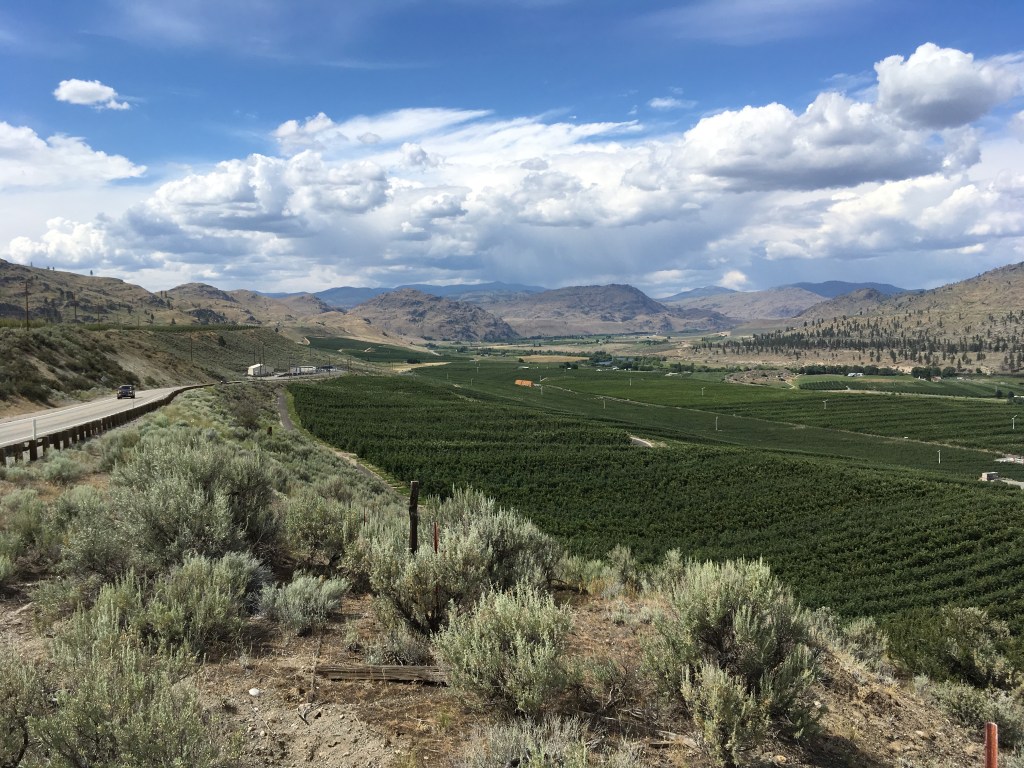
Photo from my files taken in June 2019
 Every New Season
You must be logged in to post a comment.