Inherently Privileged

It has taken me a lifetime to recognize, much less reckon with, my white privilege. It’s not that I’ve been oblivious to racism. I met Jim Crow head-on while traveling through the South in 1962. I was eighteen years old, appalled by racism but clueless about my own white privilege.

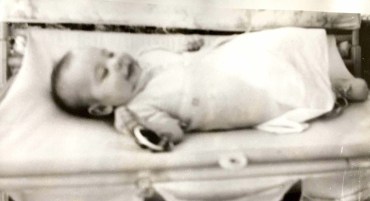
Infant Mary
Yup. It’s me, inherently privileged.

White privilege begins, obviously, at birth. Through no effort on my part, I was born to parents of European descent. Their forebears emigrated here because they wanted to, not because they were captured and sold into slavery.

In my experience, white privilege is childhood in a two-parent home; parents not rich by any means, but they didn’t have to struggle to feed us and put a roof over our heads.

White privilege is attending generally all-white schools. Well-funded schools where we learned what the state wanted us to learn: little or nothing about the evils of Manifest Destiny or the recognition that this nation’s economy was built on the backs of slaves.

White privilege is being able to live wherever I choose to live, though I seem to choose places that are pretty much white like me, where amenities like clean water are taken for granted.

White privilege is access to critical medical care if needed and lifelong preventive health care.

White privilege is seeing police on the street, in my neighborhood, and feeling safe, not afraid.

White privilege is registering to vote with no stumbling blocks and then voting without threats or chicanery.

White privilege is freedom. Freedom from and freedom to. Freedom from stereotypical judgments, harassment, disdain, dismissal. Freedom to move about, to live pretty much as I want––within the constraints of society, the system.

When we talk about “systemic” racism, we’re recognizing that racism has been consciously built into our systems: educational, health care, economic, criminal justice, even religious systems. Just as racist policies are intricately interwoven into those systems, so is white privilege. The systems are gamed.

White privilege doesn’t mean all whites have it easy. Eight percent of white Americans (that’s 15.7 million people) live below the poverty line. White people struggle too, observes black journalist Nikole Hannah-Jones. It’s like we’re all swimming in a stream, but whites are swimming with the current and blacks are swimming against it. The system is designed to move whites forward and designed to push blacks back. That’s just one morsel among many in Oprah Winfrey’s provocative, two-hour documentary, “Where Do We Go From Here?” , available for viewing on YouTube.

I’ve never thought of myself as privileged. Blessed, yes. Richly blessed. Now as I look back on my seventy-six years, the privilege that moved me along life’s current is as glaring as neon signs on the Las Vegas Strip. I’ve been complicit in a system whose inequities are being laid bare by Covid-19 deaths, disproportionately high among people of color; inequities laid bare by videos of racist brutality.

That’s a harsh word: complicit. Yet acknowledging white privilege doesn’t require taking on a heap of guilty despair.  I won’t be defeated by my lack of color any more than I want to see others defeated by their color. So where do we go from here? To the streets? Maybe. To social media? Possibly. To the voting booth? For sure. To a place of deeper understanding, a place of compassion? Let’s hope.

Truth Laid Bare: No Looking Away

Minneapolis—city of my birth, launchpad toward my independence—you’re breaking my heart.

On a Friday morning in May 1944, my dad pulled up to Swedish Hospital just in time for my mother to deliver me, their third child. Only ten days earlier my family had moved to a small, lakeside town, twenty-five miles from Minneapolis.

By the time I was eleven, I was making that twenty-five-mile journey every Saturday morning, boarding the Greyhound bus—alone, getting off downtown for my piano lesson at the Minneapolis College of Music. In the back of my assignment notebook, Mother had drawn a map, detailing where to get off the bus, what direction to walk to the college, and from there what direction to walk to the bus depot, where I would catch the bus back home.

Dayton's 2The piano lessons were of secondary importance to that walk back to the bus depot. My route took me through Dayton’s Department Store, where I was dazzled by elegant goods. I’d drop into Woolworth’s to munch on a slice of pizza while watching demonstrations of the latest gadgetry. Various little shops along the way specialized in trinkets or roasted nuts. Nobody at home worried whether I caught the 2:40 bus or the 3:30—just so I made it home for dinner by six.
Can you imagine in this day and age letting a pre-teen child travel solo to any metropolitan downtown, allowing her the freedom to explore on her own? It’s not that my parents were careless. They’d coached me on all the rules about not talking with strangers, etc. They also fostered independence.

Thus it was in downtown Minneapolis that I first became aware of black people—in those days, “colored.” The town where my family lived was all white. I would eventually realize as an adult having lived in both Minnesota and Washington state, that the North was as segregated as the South, just more subtly so.

The ten-year-old me was mystified by black people. I remember wondering about a trim, attractive woman, a clerk at Dayton’s. What was it like to be different? Over the years, as I read black writers (Toni Morrison, Maya Angelou, James Baldwin and others), I came to understand that it’s not about being different, it’s about being hated because your skin color is different.

Just a few years after my idyllic Saturdays in downtown Minneapolis, James Baldwin wrote that blacks don’t particularly care about being “accepted” by whites. “White people in this country,” he wrote in 1962, “will have quite enough to do in learning how to accept and love themselves and each other, and when they have achieved this—which will not be tomorrow and may very well be never—the Negro problem will no longer exist, for it will no longer be needed.”

Covid-19 has laid bare long-standing inequities that result from our failure to love. It has forced us to see that if you are black, brown, or Native American, you are more vulnerable, more likely to get sick, more likely to die. Videos on social media have forced us to see that if you are a black American, you are twice as likely to be killed by police as white Americans.

We are “infected by a pandemic of hatred,” said Yale law professor and black writer Stephen Carter. This pandemic is more frightening than Covid-19, which we expect will be resolved eventually with a vaccine. The pandemic of hatred has been with us for decades, for generations.

The push is on to “re-open.” We’ve gotta do better than that. We have to just plain open––open our health care system to all, open our economic system to all, open our justice system to all. We are seeing truth laid bare; we need to open the eyes of our hearts to all.

At Sixes and Sevens

Why do you suppose “Music Man” Meredith Wilson chose seventy-six trombones to lead his big parade? I understand that the composer/lyricist of one of my favorite musicals needed the three-syllable word “sev-en-ty.” They fit the triplet rhythm leading to the downbeat on “six.” But why six? Why not seventy-nine or seventy-two?

watercolour-1755721_1920This inconsequential question floats through my mind as I approach my seventy-sixth birthday amidst a pandemic. Spiritual writer Richard Rohr describes this time of global crisis as “liminal space.”

“It is where we are betwixt and between, having left one room or stage of life but not yet entered the next,” he explains. That’s how I feel about moving into my late seventies. Neither here nor there; once “mature,” now hurtling toward downright “old.”

Because I don’t know how I feel or what I think about this birthday, I decided to turn to my mother for advice. Hah! she’d say. You never asked my advice when I was alive. True, but I always knew what her advice would be, and I didn’t want to hear it. It seems that I’m catching up with my mother. It took her most of a lifetime to reach seventy-six. It’s taken me no time at all.

I consulted Mother’s diary from 1992. It seems that I’m catching up with her. It took Mother most of a lifetime to reach seventy-six. It’s taken me no time at all. She kept sporadic diaries from the time she was in college. Primarily she recorded daily events, only rarely confiding her feelings. The day before her seventy-sixth birthday she wrote that her granddaughter, with husband and child in tow, had arrived at 10 p.m. for an overnight birthday visit. Mother’s bedtime diary entry, after getting her guests settled for the night: “So this is my last half-hour of being seventy-five. Lucky me.” Her version of dry humor.

On her birthday, she noted that the celebration was nothing like her seventy-fifth, which had entailed a grandiose family gathering. But there were enough family members on-hand and calls from the others to make this day, in her word, “complete.” Her conclusion: “Very thankful for seventy-six years, for health, fine family, mostly for God’s blessing and love.”

Well, me too. Still, the number seventy-six seems boring, inconsequential. Google reminds me that there is the “Spirit of ’76,” the patriotic sentiment related to the American Revolution. Richard Nixon had “The Spirit of ’76” emblazoned on the nose of Air Force One. Other Google findings:

    • the 76 gas station chain was so-named because of the gasoline’s octane rating,
    • if I were a gamer I’d be into “Fallout 76,”
    • Denny’s restaurant sales were down 76 percent in April,
    • and finally, there’s Psalm 76. Not a lot of comfort in the psalmist’s remarks to God: “What terror you inspire! who can stand before you when you are angry?”

Googled-out, I found a list of notable people who were born the same year as I. No surprise that I didn’t make the list. Frank Sinatra Jr. did. Sadly though, he didn’t make it to seventy-six. Mother was right. I’m “very thankful.”

Illustration by Pawny from Pixabay

Confessions of a Tree Hugger

blue-4585856_1920It was a heady time. Fifty years ago, at age twenty-five, while living on an idyllic island in Puget Sound, I participated in the first-ever “Earth Day.”  According to news reports, I was one of twenty million Americans who “took to the streets” to demand a clean, healthy environment.
In my case, it was more of a stroll down a tree-lined, country road with a flock of Vashon Island high school students and staff. The mood was benignly hopeful, unlike other demonstrations of that era. If nothing else, my generation was good at showing up. Memories also include marching shoulder-to-shoulder with thousands of Vietnam war protestors through downtown Seattle as the unified chant, “Peace Now!” reverberated amongst sky scrapers and through our souls.

Somehow in the midst of that chaotic time, our nation found the political will to pass stunning legislation: Clean Water Act, Occupational Health and Safety Act, Marine Mammal Protection Act, Endangered Species Act, Safe Drinking Water Act,  and many more, including fuel economy standards for cars. All of it helped, but not enough, not in the face of climate crisis.

Where is our political will now? As I reflect on these fifty years in my own life, I’m contrite to admit: I’ve not made a single, personal sacrifice on behalf of Mother Earth. Oh, yeah. I’ve done my share of recycling. I’ve reported on various environmental issues, tried to be a conscientious consumer, considered fuel mileage when purchasing vehicles, cut back on meat in my diet. But by no stretch of the imagination could I describe any of that as sacrificial. Nothing like the sacrifices our grandchildren and great-grandchildren will be forced to make.

I approach this fiftieth anniversary with nostalgia and remorse. And yet, the hope and determination of my twenty-five-year-old self lingers. I dare to be hopeful because the solution to climate crisis is not dependent on my solitary actions, but on our communal actions. All of us as a people. If I’m the weakest link in the chain, hey! I think I’m at least strong enough to hold it together. So are you.

Not now, you might answer. Not while we have a corona virus, shut-downs and economic disruption to contend with. Yes, exactly now, when many of us have been given time away from our normal activities and stresses. Now we have time to consider. Now we have time to be inspired, to renew hope.

Take just five minutes to hear how a young cellist combined science and music to illustrate a century-long pattern of climate warming. Take an hour for a multi-faith Earth Day worship service involving world religions from indigenous to Buddhist, and even a few Episcopalians. Take the whole day, April 22, to tune into Earth Day Live, a global event that could spread faster than any pandemic––if we’re willing. If we’ll give it our time, our consideration.

This, too, is a heady time.

Image by Prettysleepy from Pixabay

Time to Talk

Just in case: I intend to reduce the increasing demand for hospital ventilators by one—my own. For a couple of years now, I’ve had a lime-green card hanging on my refrigerator, signed by myself and my primary care provider, stating clearly: “Do not use intubation or mechanical ventilation.” My PCP emphasized my wishes, printing above her signature: “No intubation if needed.”

fullsizeoutput_238c
The lime-green POLST is clearly visible, even on my crowded refrigerator

The lime-green card is Washington state’s “POLST,” Physician’s Orders for Life Sustaining Treatments. It summarizes my wishes for end-of-life medical treatment. EMTs, when answering an emergency call to a home, are trained to look on the fridge for the POLST, which is highly visible on most refrigerators amidst photos of grandchildren, pets, and favorite vacation spots. It’s generally used in conjunction with a longer, more detailed advance directive. I have one of those, too. The format I used is called “Five Wishes,” and three of my family members have a copy.

I am not against Covid-19 patients or anyone else going on ventilators. I’m suggesting that during this extra time we have at home, this time of too much TV and other distractions, we could/should be thinking, praying, and talking with family about end-of-life choices. The Conversation Project offers these eye-opening numbers: 97 percent of people say it’s important to put their wishes in writing, but only 37 percent have actually done it; 92 percent of people say talking to loved ones about end-of-life wishes is important, but only 32 percent have actually done so.

My reasons for rejecting intubation for myself are deeply personal. I have a healthy fear of dying and a  Christian’s “mustard seed” of faith, which I’m told is adequate. I’ve never been on a ventilator but close enough. My late husband was intubated and successfully weaned from a ventilator twice. The first time was the day of the stroke that paralyzed him. I was not present but anxiously driving the hundred miles to the hospital, where John had been transported by ambulance. Because he had no advance directive, no DNR (do not resuscitate) orders, the default treatment was intubation. Several days later, he could breathe on his own, which was about all he could do.

The second time, a few years later, I was at his side in the emergency room. Still John had no DNR. His doctor assured me that without intubation, “John will most surely die.” I gave the go-ahead and watched as the ER doctor tried and failed to force the tube down John’s throat, tried and failed again, quickly stepped aside and motioned to the respiratory therapist, who successfully intubated on the third try. To my inexperienced eyes, the procedure was nothing less than violent.

After John was successfully weaned a second time, we were warned that if he were ever intubated again, he would be on a ventilator permanently. I was grateful for every day John lived after his stroke, but I told him forthrightly, I could not make the decision again. This had to be his choice. In conference with his doctor and me, he gave instructions for filling out the POLST. No more extraordinary life-saving measures. Years later, he died in my arms at home. His willingness to make his own choice was the greatest gift he could have given me. He allowed me to continue living without guilt.

It’s too early in this pandemic to know how much help ventilators will be. A very, very early study based on the first hundred patients in China hints that Covid-19 patients on ventilators may have a higher mortality rate than other ventilator patients. Initial studies from Seattle indicated Covid-19 patients require longer stays on a ventilator.

Here’s what I do know: Most people will not get Covid-19 and of those who do, most will not die. We are distancing ourselves from each other not so much to protect ourselves but because we care for each other. We are limiting the pathways through which this potentially lethal virus can travel. And if worse comes to worse, one more thing I know for sure: it’s far easier for families if a patient makes her wishes known in advance, saving them the burden of withdrawing intervention when it’s time to let go.


For readers wishing authoritative information about intubation process and possible aftermaths, the New York Times published this piece April 4 by a doctor of internal medicine, who also advocates for advanced planning: What you should know before you need a ventilator.

Home is Where You Hang Out (updated April 8)

Our government says “stay at home.” I can do that, happily. Just the other evening, I was savoring my view of the Okanogan River in its ceaseless, silent flow past my home, when I became aware of a raucous party in Pioneer Park. The small park is about a quarter-mile downstream, where the river bends south, giving me a clear view of  activity there. A dozen-or-so people were clustered around the gazebo, definitely not social-distancing.

The park was built some forty years ago, the vision of the late Loretta Nansen. She conquered U.S. Army Corps of Engineers resistance to putting a park on top of their flood dike.  Her persuasive abilities convinced Phil Cleveland, M.D., whose hobby was carpentry, to build the gazebo. The park was thoughtfully landscaped with trees, benches, and native vegetation along the engineered riverbank. Just one block off Main Street, Pioneer Park was destined to be downtown’s beauty spot, a place for respite and refreshment.

fullsizeoutput_237b
Army Corps at work in Pioneer Park last summer. The gazebo (visible above the cloud of dust) survived.

Things did not turn out as Loretta envisioned. Many years later, the city removed the maturing trees to make the park less inviting to the homeless. I was still scratching my head over that one when the Army Corps thundered in last summer with heavy equipment, shoring up the dike with massive boulders. The native vegetation (aka wildlife habitat) disappeared. A botanist with the Corps promised me that willows will come up amidst the boulders. I have yet to see any sign of them. Much of the grass, where people walked or stretched out to catch the sun, was destroyed, too.

Still, people hang out there. Stay at home? I’m guessing most at the gazebo that evening were homeless. After volunteering at the Okanogan Community Homeless Shelter over the winter, I no longer use “homeless” as a generic label. Now I know names and faces: Mac and Abby and Regina and George. I know some of their stories, some of their ambitions. What I don’t know is where they are now. The shelter closed at the end of February as the weather warmed and volunteer energy had diminished to barely burning embers. I didn’t spot anyone I recognized among the party-goers.

I admit that if the shelter had kept operating, I would not have been able to continue. My task was to sit in a tiny office, knee-to-knee with the guests, recording their background information and spending an hour in chit-chat to make sure everyone was “dry and sober.” Not a safe environment for this 75-year-old in the midst of a pandemic.

The $2 trillion CARES Act contains $4 billion for homeless assistance, about a third of what advocates say is needed. An analysis by the National Alliance to End Homelessness predicts that “homeless individuals infected by COVID-19 will be twice as likely to be hospitalized, two to four times as likely to require critical care, and two to three times as likely to die than the general population.” Consider that cost.

I don’t have the magic solution for homelessness. I acknowledge activities by some homeless individuals are a headache for city officials. The answer is not in making a park so unwelcoming that only the homeless are willing to gather there. That $4 billion is certainly part but not all of the answer. It’s only when we look at homeless individuals with compassion instead of judgment, only when we wrap empathy around charity, then maybe we’ll be getting somewhere.

Things That Go Bump in the Night

There’s nothing like a loud THHH-WUMP! in the dark hours of early morning to remind one of the old Scottish children’s prayer: “From ghoulies and ghosties and long-leggedy beasties and things that go bump in the night, Good Lord deliver us.” Awakened by the crashing boom outside my bedroom window, I next heard what sounded like roller skates being tossed about in a clothes dryer. Or could it have been ghoulies, ghosties, and long-leggedy beasties rattling their chains?

fullsizeoutput_2362
My heat pump AFTER I shoveled off the snow, leaving a coating of ice

Curling into a fetal ball in my nice warm bed, I knew what had happened. A roofalanche! Translation: our sudden rise in temperature had begun to melt the heavy load of snow on my metal roof, causing the snow to slide off, landing on my heat pump. “Nothing stops a Trane!” declares the manufacturer’s marketing slogan. A cute play on words until I remembered horrific stories of trains being pounded and trapped by avalanches: from the Wellington disaster of 1910 in Washington state, when an avalanche swept two trains into a canyon, taking ninety-six lives, to as recently as last February, when two Amtrak trains had to back-“trak” because of avalanches in the Sierra Nevada range.

Avalanche training during my two-and-a-half-year residency at Holden Village (annual average snowfall 270 inches) made me deeply respectful of this potentially deadly force of nature. Besides avalanches that occasionally stop just short of the village’s back door, it’s where I learned the term “roofalanche.” Snow sliding from the two- and three-story roofs in the village is a more present menace than bears or cougar who roam the area. Yellow safety tape marks off roofalanche landing areas near buildings, warning pedestrians to tread widely.

Yellow safety tape would not have helped my heat pump. As light dawned, I donned my boots to examine the catastrophe. I called the service company and pointed the phone toward the heat pump. Even though it was buried in snow, the clanging was clearly audible.

“Yup, you’ve got ice in there,” came the diagnosis. The woman on the other end told me how to shut down the heat pump and switch to “emergency heat.” I’d never had a heat pump until this house and still don’t understand how it works. [Note to readers: Do not feel obliged to explain. It’ll only bring on symptoms of MEGO––My Eyes Glaze Over.] She assured me that some people run their furnaces all winter in emergency mode.

That was comforting and I was comfortable for about twenty-four hours, until the furnace stopped. It was Saturday morning and I was darned if I was going to pay an extra charge for a weekend service call. I used a space heater to warm just one room at a time. It’s a small house and, after all, we were experiencing a warming trend following sub-zero temperatures.

Thus I spent the weekend at a cozy fifty-five degrees indoors, counting my blessings: blessed by three or more layers of clothing, blessed by blankets warmed in the clothes dryer, blessed that the power hadn’t gone out so I could run the space heater and clothes dryer, blessed that this event came AFTER sub-zero temperatures, and blessed that—except for an occasional bump in the night—my house is comfortable all year round.

Final blessing: the technician arrived immediately after I called, first thing Monday morning. Thus richly blessed, I felt downright grateful as I paid the bill, especially since he gave me a “senior discount.”

All Things Being Equal, They Are Not

The handsome, young, African American man—a guest at the homeless shelter where I volunteer—sure knew his Bible. He could not only quote passages but cite verse, chapter and book.

“Matthew 19, verse 21,” he proclaimed with rapid-fire delivery. “Jesus said ‘sell your possessions and give the money to the poor.’ Are you willing to do that? Will you sell your house and give the money to the poor?”

We knew who he was talking to. Of the eight people gathered in the shelter’s intake room, only two of us—the volunteers—actually had a home. His question was in earnest, as if my soul survival depended on my willingness to follow Jesus’s instructions literally. I could have responded that if I sold my home, I’d have nowhere to cook the dinner he and the others were eating. I could have offered all kinds of practical responses, but I could see no good emerging from such a discussion. It would only have emphasized the divide between the haves and the have-nots in that small room.

I haven’t seen him in the weeks since, but his challenge has stayed with me, probably not in the way he intended. Of course it’s made me more conscious of how blessed I am to have a home. More than that, it’s deepened my awareness of how significant our homes become as we age. More than a sheltering abode, our home serves as the archive of our life, a storehouse of memories, the very edifice representing who we are. For many, having to move from the home of a lifetime can feel like giving up on life itself.

And then there’s the practical matter. A home is a financial asset. We look upon our homes as an investment. When we sell, we expect to make money. A friend who is moving into a retirement community is conflicted over whether to redecorate her new apartment, which doesn’t suit her taste, which is exquisite. It’s one of those facilities where you buy in and are promised (for a price) all the services you need as you age—memory care, nursing, etc. She can afford a new decor, but because she’s a shrewd money manager, she’s not sure she wants to spend that money. When she dies, the apartment reverts to the facility. Her estate—that is, her children—will not benefit one cent from any improvements she makes. Should she spend the money for her own enjoyment now, or put up with an environment that doesn’t suit her so her children can benefit later?

The young man from the shelter would advise her to forget the whole thing and give the money to the poor. Would that it were that simple. Abigail Disney, granddaughter of Roy O. Disney, co-founder with brother Walt of the Disney Company, is featured in an article entitled “Embarrassment of Riches” in the January 6 New Yorker magazine. She’s a member of “Patriotic Millionaires,” an organization of very rich people who lobby for higher taxes for themselves and all ultra wealthy.

When she was younger, Disney told the interviewer, she considered giving all her wealth away. Instead she has given money incrementally, and because money begets money, she says she has ended up giving away more money than she initially had. She scoffs at billionaires such as Warren Buffett and Bill Gates who have pledged to donate at least half their fortunes to philanthropic causes.

“I’ve given away much more than fifty per cent of my net worth, and I don’t intend to stop,” Disney told the New Yorker. “And, frankly, if you’re a billionaire and only want to give away half of your fortune, something is wrong with you.”

When it comes to philanthropy, how much is enough? The Bible says a tithe, or ten percent, should do it. When my mother was alive and living on her retirement savings, she continued to pay a ten percent offering to her church and other causes.

“Mom,” I’d say, “you already paid ten percent when you earned that money. You don’t have to pay another tithe now.” She’d give me that exasperated, you-really-don’t-get-it look that she learned from me when I was a teenager. When Mom died, my sister and I inherited the bulk of her estate. You’d better believe we both passed ten percent on to charity. The tithe that keeps on giving.

This morning I made a quick trip to the homeless shelter. With temperatures and wind chill plummeting to minus-fourteen, we’re organizing extended shelter time and breakfast for the guests this week. The shelter, which is run entirely by volunteers, usually operates only until seven a.m. Guests must fend for themselves from then until it re-opens at six p.m. After a quick meeting and short drive in a cold, cold car, I was especially grateful to walk back into my warm, warm home.

I settled down with coffee and the January 13 New Yorker to read an article about inequality. Our nation’s founders may have declared that we’re all created equal, but it doesn’t take long before life sorts us into folks who have more and less—some have more money, others less; some have more opportunities, others less talent; some inherit healthier genes, others an unhealthy environment, etc., etc. Throughout history, people have tried to resolve this issue of inequality. A core problem identified by the New Yorker is what philosophers call “the problem of expensive tastes:” what seems like a necessity to one person looks like a luxury to another.

My reading was interrupted by a ruckus on the ice-covered river that flows past my home. A bald eagle had landed and was tussling with something on the ice. At first I thought it was trying to get hold of a fish. Then I realized, to my horror, it was on top of a duck, tearing at the duck with its beak and talons. Not just any duck. The renegade domestic duck, an American Pekin, that I’d watched all summer and worried about since winter arrived. The mallards and golden eye have all flown away to open water. This duck apparently had its wings clipped before it escaped from the farm.

The eagle ferociously pecked and pulled on the duck. Then, unbelievably, the duck shrugged off the raptor and started waddling across the ice, a little shaky, slipping and sliding, but making determined progress. The eagle attempted a few fly-bys but for whatever reason stopped short of attacking the duck again. Certainly this was a contest between two unequals. Yet the duck apparently won the battle, if not the war, through sheer determination. It disappeared into the bushes on the opposite bank, either to quietly heal or quietly die. It has not reappeared all afternoon.

On my side of the river, I’m in my home, warm and comfortable. But not too comfortable.

fullsizeoutput_2342
Equals in battle?

May Long-Lost Resolutions R.I.P.

Like it or not, New Year’s is an apt time for appearances by ghosts of resolutions past. Resolutions long forgotten. One of mine showed up just after midnight when the neighborhood celebratory fireworks had faded into black silence.

Because I’m easily subject to suggestibility, I suspect her appearance was prompted by a short story I’d listened to earlier in the evening. In Simon Rich’s “Birthday Party,” a man celebrating his thirtieth birthday is visited by his former selves—at ages fifteen, seven, and two. The fifteen-year-old is especially distraught that the thirty-year-old has failed to live up to his dreams, has basically “sold out.” My visiting ghost was equally disgusted as she unearthed a resolution by my fifteen-year-old self.

“You swore you’d never get old,” she reminded me. I tried laughing it off.

“One really doesn’t have the option,” I answered.

“I’m not talking about chronological age,” she retorted. “You resolved always to be up-to-date, cool, with it, kickass …”

“Careful,” I interrupted. “I didn’t even know that word at age fifteen and I don’t use it now.”

“My point exactly.”

She had me. At age fifteen, I’d regarded my parents and grandparents with great affection, but I would NEVER be like them. I would always be in style, wear the latest clothes, listen to popular music, drive hot cars (once I got my license). Now I’m older than even my grandparents were when I was fifteen, and I’m duplicating their playbook.

“Just look at you,” the specter continued, her eyes scanning my at-home outfit from the feet up: heavy socks inside dog-chewed Crocs, faded corduroy pants, turtleneck pullover, well-worn cardigan …

“… and no makeup!” she moaned.

“I’ll put on some lipstick if I go out,” I said.

“Go out? GO OUT?! Just how many New Year’s Eve invitations did you turn down?”

“Um, one … or two … maybe three.”

“So you could do what?”

“Stay home, read a book, listen to Glen Gould play Bach …”

Her heavy sigh echoed the past. My mother hated my fifteen-year-old sighs—expressions of adolescent exasperation mixed with a disdain that, had I stated it verbally, would’ve grounded me for at least a month, maybe the rest of my life.

The ghost renewed her attack.

“We’ve established you no longer know how to party. What do you know about popular culture?” I shrugged my indifference.

“Just as an example, who is Taylor Swift?”

I made a wild guess: “Is he a singer?”

“Like, SHE’S only been named ‘Artist of the Decade!’”

“I must’ve missed that decade.”

“Your eleven-year-old car says as much. What ever happened to your preference for sporty convertibles? You’re driving a Dodge sedan!”

“Yeah, well, it’s safe and comfortable and PAID for!” I shot back.

Defeated, she shook her head. As she faded from sight, I heard her tearful groan, “What has become of me?”

It’s true I lost that teen-age resolve, but maybe I gained something along the way. A modicum of wisdom?

IMG_1581
At-home comfort fashion from the feet up