

I went to watch butterflies being released. It’s an annual ceremony sponsored by our home health and hospice agency as a memorial to those who’ve died. Tiny Monarch butterflies flew free as a symbol of life’s transcendence. The ceremony was beautiful, yet I kept thinking: the irony of it all.
The event was held in our city’s newest park, a memorial to the pioneer Dalton-Klessig family. The park exists solely due to the vision of a now elderly woman named Mary, who is still very much alive but well into her journey of dementia.

In the ’90s, two long-term care facilities for the elderly were built on the north edge of town in an area landscaped with sagebrush, tumbleweed and sand. Mary dreamed of a park designed especially for senior citizens, one with shade trees and grass, a paved pathway for wheelchairs and walkers, a gazebo, a water fountain for the disabled, even a playground for visiting grandchildren. Always a generous donor to community causes, even Mary didn’t have enough funds to buy the land and develop the park.
Pretty much out of the blue (some would recognize it as God’s hand at work), Mary was contacted by descendants of the Dalton-Klessig family. None of them live here any longer, but they wanted to donate toward a memorial to their forebears. Did Mary have a project for them!

It wasn’t easy. There was the political hurdle, convincing the city to accept yet another park that will require ongoing upkeep and insurance. Our city is small but blessed with numerous “nuisance” parks, as one city official described the little green areas that dot our neighborhoods. In the past, the city council had refused to accept an offer of yet one more park.
Mary’s longtime service on various boards and commissions was legendary. She had political pull and prevailed. She oversaw the complexities of land purchase, planning, construction, landscaping, plus a myriad details. She invited my late husband, a wheelchair user, to inaugurate the asphalt trail.
Now Mary lives across the street from her park in an assisted-living facility. She was not at the ceremony. Whenever I talk with her about her park, she smiles vacantly, not understanding. Her inability to enjoy the fruits of her labor is, for me, salt in the bitter wound of dementia. Yet I have to consider that we all do good things, large and small. Sometimes we leave a legacy of good without even knowing it. That would be good in its truest form.
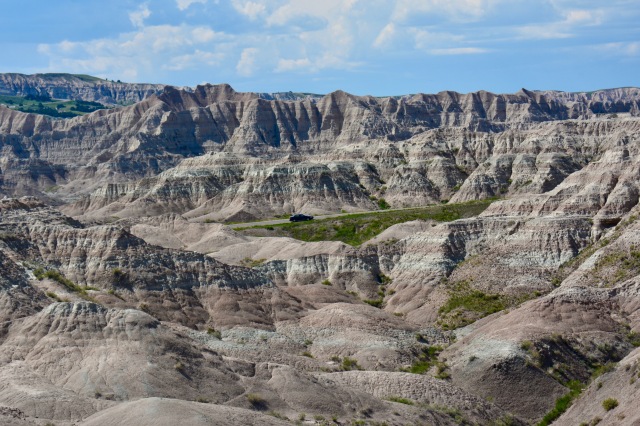
 I was inspired to travel the Oregon Trail after reading “Women’s Diaries of the Westward Journey” by Lillian Schlissel. The book is a compilation of what women’s records of their experiences during the massive exodus between 1840 and 1870. The women bluntly describe the hardships, danger, congestion, duplicity, disease and starvation that were rampant. A quarter of a million Americans gambled that they’d survive the trip. Ten percent lost the gamble. A not infrequent cause of death for women was childbirth.
 newlyweds, on the trail with Nathan’s parents, five brothers and other relatives. They’d gone no further than current Nebraska when Rachel came down with cholera one morning and died that evening. Nathan buried her there, finding a rock on which to carve her headstone. After great privation, the Pattisons ultimately reached Fort Vancouver. Nathan never remarried. He died in Olympia at the age of 67.
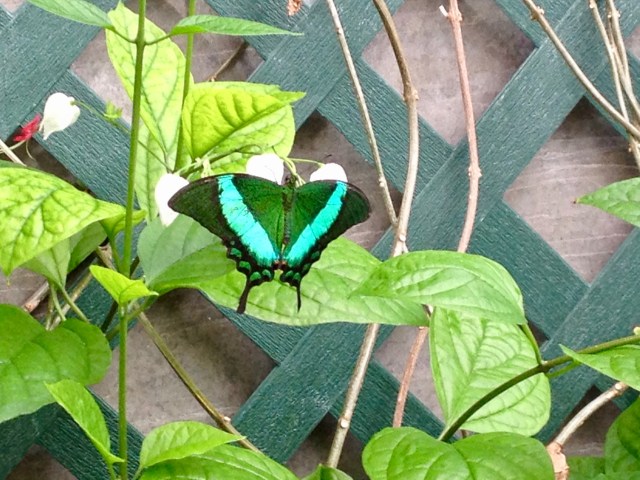 Fortunately for me, my sister’s personal totem is the butterfly. Otherwise I probably would’ve skipped visiting the


You must be logged in to post a comment.