Get to Know Your Mother With a Walk Through Time

I didn’t think a Sunday afternoon stroll through one of Seattle’s more stately neighborhoods would tire me as much as it did. But traveling through time can be exhausting. Our group of eight walkers made it through 4.6 billion years in a little over two-and-a-half hours. Every step (if you have relatively long legs) represented nearly a million years. 

It was a venture in “Deep Time,” a way of viewing Earth from a sensory perspective. More than a class in geology (although the experience would fit into a science curriculum nicely), “Deep Time” allows us to experience Earth’s story from the ground up, including how and where we humans fit in. 

You can take a “Deep Time” walk on your own with help of a free app. Instead, our small group was led by Richard Hartung, an Earth advocate. We began our walk on the grounds of St. Mark’s Cathedral on Capitol Hill. Our pace leisurely, we stopped every few billion years while covering 4.6 kilometers (a little less than three miles).

Scientists generally agree that Earth began to take shape from a mass of gas and rocks revolving around a faint sun. A billion or so years later, a huge collision threw off enough debris to form the moon, the beginning of our seasons. Not until 3.8 billion years ago did life begin to emerge in the form of single cell organisms. If the thought of humans evolving from monkeys disturbs you, rest assured. It’s those single cells, said Richard, that were “our common ancestors.”

By the time we reached Lowell Elementary School at 11th and Mercer streets, almost an hour had passed, and it was 3.1 billion years ago. That, said Richard, was when those single cells began to come together in “community.” How perfect, I thought. Lowell school is all about community. Its progressive programs serve many children from unhoused families. Students come from families speaking thirty different languages.

Soon we entered Volunteer Park, reaching the halfway point. About 2.3 billion years ago, oxygen was beginning to move into Earth’s atmosphere, for which I was thankful. We’d climbed a slight grade which had me breathing a little more deeply. Things started happening at a faster pace: endosymbiosis, a couple ice ages, earth’s revolutions slowing down and the sun brightening. As we walked past Lake View Cemetery, where Bruce Lee is buried, insects began to emerge some 425 million years ago. The coal that is mined today began forming 360 million years ago.

Millions more years flew by as we strolled: volcanic eruptions, dinosaurs, continental drift, an asteroid hit the earth and killed off the dinosaurs. Two-and-a-half hours from our starting point, the glorious Rocky Mountains and Andes emerged. Twenty-three million years ago, primates arrived, and my knee — the one I fractured earlier in the summer — was beginning to ache, just a little.

To make an unfathomably long story ridiculously short, homo sapiens appeared on Earth at the very end of our walk, just 200,000 years ago, or about eight inches from our finish line.

When we talk about history, we tend to think of it as human history, notes David Abram, one of the developers of “Deep Time.” Our “real history,” he says, is the history of the land itself, Earth, with which we are “embedded, entangled.” 

Throughout the walk, Richard noted the various times when Earth heated and cooled in cycles that lasted for eons, causing devastation. My notes on that are fuzzy because his voice was often drowned out by planes overhead, en route to and from SeaTac International Airport, burning upwards of a dozen tons of fossil fuel per hour.

I recalled a friend who tried to calm my concerns about climate change. “Mary,” he said, “there’ve always been cycles of Earth cooling and warming.” True, Richard would reply. But the change we’re experiencing now is coming one hundred times faster than any in the past. His final question to our group was a challenge: “What do we do?” We sat quietly, mulling various strategies. 

I believe we must begin by caring about our relationship with Earth. When we care, we become more aware, we ponder our daily decisions, practices, and habits that impact Earth. Ancient Greek wisdom understood Earth to be Gaia, the mother of all life. Chief Seattle echoed that insight: “The earth is our mother. Whatever befalls the earth, befalls the sons of the earth. If men spit upon the ground, they spit upon themselves.”

We must learn to appreciate Earth as the mother who has generously nurtured us. As babies we are suckled, but now we have sucked our mother dry. She is old and very sick. It’s hard work to care for the old and the sick. It demands personal sacrifice. I’ve been there and learned  that caregiving is also a joy-filled opportunity to love. Now is the time to love Earth and all her inhabitants tenderly and deeply. She is, after all, our mother.

A Season with No Merch?!

Merchandisers who’ve commandeered religious seasons such as Christmas and Easter have yet to discover the Season of Creation, thank God. There could be a run, however, on those cute little statues of St. Francis that show up in gardens. He’s the 13th century monk usually depicted with a bird or two perched on his shoulder.

The Season of Creation is a global, ecumenical movement, reminding Christians of their relationship with Creator and creation. It was launched some decades ago by the Eastern Orthodox church and now encompasses Catholics, Protestants, and who knows how many other flavors of belief. It began Sept. 1 and will end Oct. 4, the feast day for St. Francis. 

Because Francis was especially in tune with all kinds of critters, on his day many churches invite congregants to bring their pets to a special worship service: a blessing of the animals. It can get quite hilarious if not unmanageable. A church I attended ultimately gave up, asking members to simply bring a photo of their pet.

In line with this season, I’ve been reading a series of meditations about getting close to nature. The emphasis is on forests, lakes, rivers, birds, and beasts. I’m fortunate that I’ve been able to explore that part of creation through the years. But in this season of my life, I’m getting closer to another kind of nature — the human part.

For decades I looked from my riverside home across a valley whose mountainous boundaries were set by the grindingly slow movement of glaciers eons ago. Now from my thirteenth floor window I look into an urban valley bordered by modern skyscrapers, clustered to create a human-made horizon. Instead of watching the flow of river currents, I gaze at the flow of human traffic —on foot, in vehicles, riding scooters and bikes — as they navigate the busy intersection of Ninth and Seneca.

At a time when wars and political strife make us wonder if humanity can ever get along with itself, watching the rhythm of city folk coming and going can be breathtaking. It’s as inspiring as any of the mountain-top viewpoints I hiked to back in the day. For one thing, there’s a mutual agreement that a simple device changing from red to yellow to green will govern who stops and who gets to go. 

From that aspect of civility my gaze wanders to towers of concrete and glass. I ponder the complexity of conceiving, engineering, constructing such edifices. I have no idea how many buildings I can see from my window. A lot. Trying to count them would be as silly as if I’d tried to count the trees growing on the riverbank across from my former home. Clear to me  is that each building expresses human creativity, cooperation and genius, all of which I believe are Creator-given.

I’m writing this on Sept. 21, the International Day of Peace. This day launches another season that cannot be merchandised: “Campaign Nonviolence Days of Action,” which ends Oct. 2, the International Day of Nonviolence. It too is a global movement involving some 5,000 marches and rallies calling for peace, economic equality, racial justice and environmental healing. War and acrimony dominate headlines and the evening news broadcasts. But we — all of humanity — hunger and thirst for peace.

And of course we know that it must begin with us individually, each in her and his own heart. Every peace activist throughout history, from Buddha to Jesus to St. Francis, from Gandhi to Martin Luther King Jr., taught that peace begins within. Palestinian Quaker Jean Zaru describes that inner peace as “not simply being nice, or being passive, or permitting oneself to be trampled upon without protest. It is not passive nonviolence, but the nonviolence of courageous action.” It takes courage — the kind of courage couched in humility — to empathize and forgive those with whom we disagree, who may have wronged us. Yet those are the strategies that open the door to true peace, which is love. Pace e Bene.

Ferry Tales: Scandalous events at last revealed

Among the joys of old age: you finally get to reveal long-held, sometimes scandalous secrets. Either those involved have passed on, or the events were so far back, they can no longer embarrass. 

This thought came to mind as I read a Seattle Times story about the retirement of two venerable Washington state ferries: the Elwha and Klahowya. Both are headed to the scrap heap.

I was a frequent commuter aboard the Klahowya in the 1970s, when I lived on Vashon Island. A sedate, hard-working vessel, the Klahowya received little notice as she sailed a triangular route between Southworth on the Olympic Peninsula, Vashon Island’s north end, and Fauntleroy in West Seattle. 

The Elwha was another matter, involved in one maritime scrape after another. The Times piece quotes Steven Pickens, Puget Sound ferry historian: “I will not be sorry to see the Elwha go. In fact I’d probably give it a kick on the way out if I could. I’ll miss the Klahowya.”

Likely the Elwha’s most infamous incident was in 1983, when she went off-course sailing from Anacortes to Orcas Island. She hit a reef, causing a quarter-million dollars worth of damage and a major interruption of service. Reason for the stray? Turned out the captain had a passenger in the wheelhouse to whom he’d “taken a shine.” He’d rerouted so the passenger could see her house from the water. Both the skipper and the head of the state ferry system lost their jobs over that one.

By 1983 I was living in the drylands of Eastern Washington, my ferry commuting days behind me. Yet I wasn’t at all surprised with the news of shenanigans in the wheelhouse.

Besides commuting aboard the Klahowya, I frequently was a passenger on the much smaller Hiyu II. She ferried islanders from the south end to Tacoma throughout the 1970s. She was a small boat on a short run, serving a tight community. Everyone knew everyone. Passengers were commonly invited to the wheelhouse to chat with the skipper and crew. Understandable. Steering a boat back and forth, forth and back, back and forth, could get pretty tedious.

Hiyu II ferried islanders between Vashon and Tacoma

One sunny afternoon, my parents my and I boarded the Hiyu for their first island visit. The deck crew ushered us to the wheelhouse. My mother was especially thrilled. In her college years, she worked as a waitress aboard a cruise ship on the Great Lakes. Yet I doubt she’d ever made it to the wheelhouse. 

For decorative reasons, the builders of the Hiyu had installed old-fashioned wooden steering wheels. It was a wheelhouse, after all. The vessel was actually steered by toggle switches on a kind of horizontal dashboard. The skipper, who had total control of the ferry at all times, asked Mom if she’d like to steer, pointing to the fake wooden wheel. Thrilled, she took the wheel, standing straight and tall as the ferry held its course. 

“I can’t believe he let me do that!” she later exclaimed as we descended the stairs to the car deck. She was excited, yet a little dubious. Was it really appropriate for a common citizen to steer the boat? Obviously that particular skipper (who, I emphasize, is no longer in this realm) enjoyed playing that trick for special passengers. I’m sure that kind of “hospitality” ended as of 1983.

The Hiyu II has been refurbished as an entertainment venue on Lake Union. I could rent it for three hours of sailing for a mere $10,000. I doubt any party I could dream up would be as much fun as that afternoon cruise when my mother skippered a Washington state ferry.

When Fate Turns the Page: Time to start a new chapter

The thunder of U.S. Navy “Blue Angels” skimming the tops of Seattle skyscrapers reminded me it was a one-year anniversary. On the morning of Aug. 2, 2023, I was in Portland, saying that impossible, final goodbye to Lee, my soul brother for more than fifty years. 

“We’re both going on a journey, but in different directions,” I said to him, leaning close to kiss his cheek. He whispered something I couldn’t understand, but words no longer mattered. We both knew that. I got in my car, dry-eyed with a sobbing heart, and drove north to Seattle. A chapter in my life had just ended. Maybe the whole book. Maybe I was driving into the epilogue. 

All those years ago, Lee and wife Mary Lou had stood as witnesses when John and I married. It was like a marriage of marriages, a foursome. As couples, we never lived close to each other, often thousands of miles apart. Yet we’d travel those miles to share slices of life. Our foursome dwindled as John died in 2007, Mary Lou in 2020. Lee and I soldiered on. Frequent phone calls. Occasional visits. We’d talk idly about road trips we might take together, but we’d both seen plenty of road. And now, here I was, back on the road, the lone survivor. 

I had an appointment to see an apartment in Horizon House, a retirement community on Seattle’s First Hill. I’d visited a few months earlier and fell in love with the location, energy and philosophy. People move here not to retire and die but to live, contribute, and matter. Still, I was skeptical. I’d been invited to look at a studio apartment. I couldn’t imagine a studio large enough for me, much less my “stuff.”

I asked my niece Sandy to join me. A savvy realtor, she poses the questions that never occur to me. The sales rep unlocked the door to 13-A, and I walked straight to the window, all of twelve paces. Windows have always been the most important feature of anywhere I’ve lived. What would I be viewing? An urban valley of rooftops in the foreground ringed by a horizon of office and apartment towers. Columbia Center, Seattle’s tallest building at 72 floors, loomed above the rest, piercing an endless blue sky.

That’s when we heard the thunder. Not a rain cloud to be seen but jets skimming through the air with gasp-inducing precision. Seattle’s annual Seafair celebration, complete with aerial show. I teased the sales rep about arranging a spectacle as part of her marketing ploy.

With or without jets — especially without, I decided the view would keep me adequately absorbed. After decades of living on a riverbank, I’d be watching a different kind of wildlife on the busy streets thirteen floors down. The studio was big enough for me, and the storage unit in the basement large enough for my stuff. For the next three months I lived in an emotional vortex as I prepared to  move. I celebrated and mourned the ties with people and place that had bound me to the Okanogan country of eastern Washington for forty-four years. I’ll never become untied.

While I’ve lived in Horizon House only nine months (an appropriate gestation period), I’m convinced I made the right decision. And here again are the Blue Angels. Thrilling as the aerial shows are, a growing number of voices object to the noise and environmental consequences. Protesters argue that each jet burns about 1,500 gallons of fuel per hour. Each air show puts some 650 metric tons of CO2 into the atmosphere of an earth desperate to reduce carbon emissions. The Blue Angels may not be around forever, nor will I. But I’m here for at least another chapter.

If A Hippopotamus Can Fly: Why, oh why, can’t I?

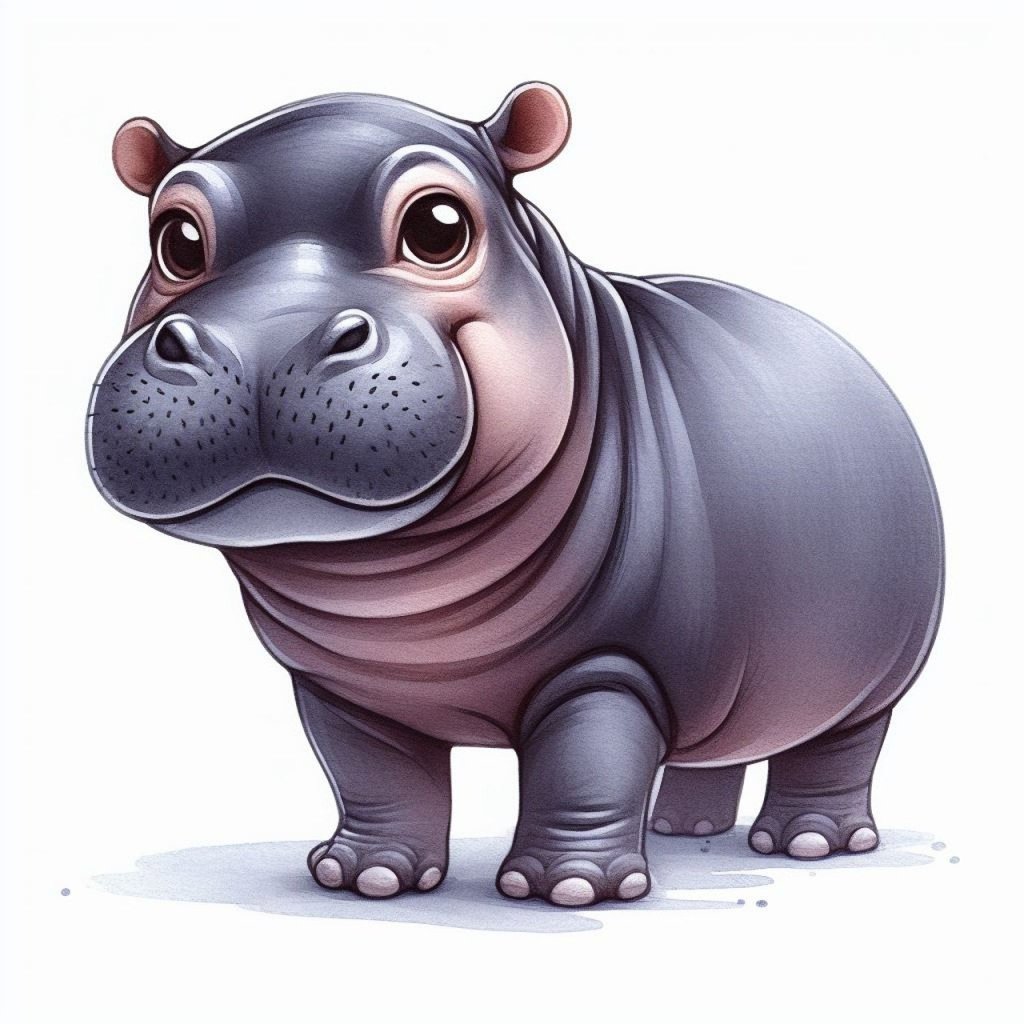
News item: “…researchers discovered that hippopotamuses — which can weigh up to 8,000 pounds — become airborne with all four feet off the ground for up to 15 percent of the time while running at full speed, or for about 0.3 seconds.” (The Week, July 19, 2024)

I reckon I was airborne for about 0.003 seconds before my recent bone-shattering crash on a Seattle sidewalk. I weigh — well, a lot less than 8,000 pounds — and I had only one foot off the ground at a time as I walked at a reasonable pace. Yet there I was, flattened, while the hippopotamus continues to soar through the air. It’s a miscarriage of justice —an unequal application of the law of gravity.

Gravity is out to get us humans. We teeter around on two legs, at a distinct disadvantage to four-legged critters. Scientists tell us that our long-ago ancestors switched from four- to two-legged travel to save calories. We use less energy when walking than our relatives, the chimpanzees, who employ both knuckles and toes as they stride through the jungle. 

The World Health Organization reports that globally, 684,000 people die from falls each year. In this country, says the Center for Disease Control, falls are the leading cause of injury for adults 65 years or older and, even more frightening, the leading cause of injury-related death in that same age group. 

My friends and family offered all sorts of kindly advice during my two-week hospital stay, followed by a few days in rehab, and now as I continue therapy at home. “You don’t want to fall again,” they lovingly caution. Fact is, I didn’t want to fall in the first place. I’ve long been pro-active to avoid falling. I own and used a balance board; I stood on one leg while brushing my teeth; I continually engaged in core strengthening exercise; I wore sturdy walking shoes, and just FOUR DAYS before my fall, I completed a balance/fall-prevention class. 

“Perfect score,” the instructor told me, happily adding: “but of course, you had a perfect score at the start.”

The reasons we fall are complex. The CDC lists lower body weakness, vitamin D deficiency, difficulties with walking and balance, medications that affect balance, vision problems, foot pain or poor footwear, home hazards or dangers such as broken or uneven steps, throw rugs or clutter, etc. In my case, it was an uneven bit of concrete sidewalk. Gravity happens.

Reading through the CDC brochure, “Staying Independent,” I checked a definite “yes” next to the statement, “I am worried about falling.” The brochure commentary is not particularly helpful: “People who are worried about falling are more likely to fall.”

In his book “Falling Upward,” spiritual writer Richard Rohr offers a more encouraging point of view. In this “second half” of life, he suggests, we are free to fall, although not in a physical sense. We no longer have to protect our fragile egos, no longer must we “push the river,” no longer must we strive to have what we love, instead, we love what we have. Rohr cites St. Francis, who “spent his life falling, and falling many times into the good, the true, and the beautiful.” I’m willing to take that kind of fall.

I’m convinced my fall prevention work saved me from worse injuries and speeded my recovery. The CDC says one in every four older adults reports falling each year. I count as one this year, which means three others are off the hook. I hope, dear reader, you’re among the three.

Embracing Life’s Lessons: From Caregiver to Patient

If life is all about learning, I’ve just earned my post-doctoral degree following hospitalization. Ouch. I know. Self-serving puns aside, it was a novel experience to be IN bed instead of bed-SIDE.

For the past three decades I’ve been doing preparatory studies by caring for loved ones during their final passage of life. Among them were my husband, mother-in-law, mother, and sisters of my heart. I’ve witnessed the grim effects of stroke, cancer, heart disease, ALS, and simple, intractable aging.

With each passing I came to the same conclusion: I’m not particularly afraid of death, but I’m terrified of the health care industry. It is to be avoided at all costs.

When I made a full frontal landing on a concrete sidewalk nearly three weeks ago, my first thought was a prayer: please, no injuries requiring medical attention. 

“Nothing broken,” I announced cheerfully to the strangers who helped me up. What did I know?! I painfully crawled into an Uber for the short ride to my apartment complex, where a nurse checked my vital signs. I was alive.

“Ambulance,” he suggested.

“Nope,” I countered. “I’ll just ice my (screaming) knee and elbow. I’ll be fine.” An hour later I was on the phone saying, “ambulance.”

Once again I assumed the role of bedside observer, but this time observing myself as patient. I consciously sought a sense of detachment, witnessing my own experience as if I were someone else, watching, not judging.

I was not at all approaching death’s door, yet right there at my side were the beloved ones with whom I’d journeyed in years past. While I thought I was caring for them, they’d actually been teaching me: how to let go, how to accept, how and where to set boundaries, when to laugh, when to cry and grieve, how to bless and move on.

My husband, who died in 2007, has been especially present. A brainstem stroke left him with the unthinkable diagnosis of Locked-In Syndrome: a fully functioning mind “locked” inside a totally paralyzed body, unable to speak or eat. Yet he lived a meaningful life for another fourteen years. His presence is palpable, reminding me how he faced adversity with courage, determination and, most important, patience.

My mother sternly warns, “DON’T!” as I start to pick up a sock that fell on the floor. Mother broke her neck by falling when she stooped to pluck an errant thread from the carpet. She survived, but it was a long, arduous recovery. She ultimately died with cancer.

“Thanks, Mom,” I respond when I hear her voice. “You paid a heavy price to teach me this lesson.” I take the time to retrieve a mechanical grabber and safely pick up the sock.

When my dear friend Sharlene was diagnosed with ALS (Lou Gehrig’s Disease), her wry and playful humor rose to the top. Told the disease is incredibly rare, she declared, “I’m one of the CHOSEN.” She taught me that we are a mixed bag of emotions, all valid. She howled volubly with grief and rage every time the advancing disease robbed her of yet another function: walking, eating, talking.

When she could no longer speak, she typed jokes into her talking laptop and played them for strangers as we rode elevators at the medical center. One delighted passenger suggested she be hired permanently. She rather liked the idea.

With death approaching Sharlene spelled out her final request to me by painstakingly moving her one functional finger across the sheet on her bed: “Mary, write my obit.” I did, but I wish I’d done it better, made it more fun, like her.

I sat for hours with my soul sister, Mary Lou, who in her final weeks often resisted pain-killing but sleep-inducing medication. “I don’t have much life left,” she protested. “I don’t want to sleep through it.” 

Walking the route to humility

Our friendship had begun decades earlier when, as office colleagues, we discovered we both played piano. We began meeting weekly to play duets. Mary Lou insisted on playing “secondo” while I played “primo.” As in dancing, someone has to lead.

Thousands of miles and a multitude of shared adventures later, as Mary Lou lay dying she asked what of her possessions I wanted to inherit. I didn’t have to think about it.

“Your humility,” I quickly answered, humility not being one of my stronger suits. She had it in abundance, along with joy, grace, and a delicious sense of irony. Mary Lou shows up all the time now, her musical chuckle echoing in my ear at every pride-punching, ego-deflating event in my life.

“This is what you asked for,” she reminds me.

Appropriately humbled, I’m returning home today after two weeks in a hospital and four days of rehab. Therapy will continue at home. I’ll be aided by a walker, a leg brace, and many well-wishers from whom a river of prayer has flowed.

Healing is not a solo venture. If we think it is, we deceive ourselves. If it were up to just me, I could not, would not fully heal. Lesson learned.

Living In Denial: There’s no ‘sure’ in medical insurance

Here’s how a person without life-threatening injuries (just two fractured bones) gets to lounge in a spacious, expensive, private hospital room for two weeks. To borrow from the “Music Man’s” warning about the game of pool, my saga starts with I and ends with E, spelled I-N-S-U-R-A-N-C-E.

At the start of my recent hospitalization following a bad fall, we called to make sure of my  insurance coverage. We were told convalescent care for therapy following hospitalization and surgery would be “automatically” approved. A few days later, with no explanation, the benefit was denied.

This is a national epidemic. As I spell out my story, I’ll bet you’ll be thinking, “Well, I can top that one.” Any time I tell this tale, the listener (especially people working in health care) inevitably comes up with something even more dramatic. A study by the Kaiser Family Foundation (KFF) determined that, on average, 17 percent of “in-network” insurance claims — some 48.3 million — were denied in 2021. Some companies denied up to half the claims that came their way.

The Washington Post reported one company even has a position with the title “denial nurse.” Some companies use computer algorithms or even AI to “review” and deny benefits without having to look at a patient’s medical chart.

“[M]edicine has become big business. Now health insurance is, too,” editorialized the podcast, The People’s Pharmacy. “These two mighty industries are battling over who can make more money from our illnesses.”

Well, okay. Isn’t that the capitalistic American way? 

But wait a minute. Aren’t we good capitalists taught not to throw money away? To get the most bang for our buck?

After the order for my rehab was denied, we immediately appealed. I’ll spare you the excruciating details of the process other than to make two observations: communicating with an insurance company is as frustrating as trying to reason with a vending machine that’s taken your money and withholds your candy bar. Second, my doctor wasted valuable time on an alleged “peer-to-peer” (doctor-to-doctor) phone call. It turned out he was talking to a mere note-taker who asked a list of generic questions.

I consider myself fortunate. The hospital wasn’t about to discharge me — still too large a fall risk. There I sat, achieving little toward my goal of full recovery that I knew would come with intense therapy. The insurance company ultimately acquiesced. After a week’s delay, I finally made it to the rehab facility. It costs $604 per night. I haven’t seen the hospital bills yet, but on average, KFF says hospital stays in Washington state cost $3,843 daily. Let’s not do the math. It’s too painful.

“The system is broken,” said my doctor, shaking his head. Yet he shows up to work every day. He and more than 20 million other health care workers show up for stress-filled jobs. They tend to patients and side-step obstacles in a system that everyone knows is broken. From CNAs to surgeons, these are the folks who matter. And the bean counters?

They’re out to lunch.

Dependence Day: Are we really free, or are we kidding ourselves?

On day No. 12 in the hospital, as my fractured bones heal I realize I’ve been given an additional break —a pause.

When I met a Seattle sidewalk up-close and personal a week-and-a-half ago, it interrupted my schedule: things to do, people to see, places to go. Since then I’ve been given long, seemingly empty hours of “doing” nothing. My arena of activity is limited to a bedside table (15 by 34 inches — I measured it using tape from my knitting bag). The table is piled with notebooks, hospital menu, a few papers relative to injury and recovery, water jug, computer, phone, maybe a snack or two. 

If something I think I want or need is beyond my reach, it’s as unavailable as breathable air on the moon. Like that pillow, just four feet away, that would feel good under my fractured elbow just now. I’m capable of wriggling out of bed, shuffling the four feet (abetted by the hip-to-ankle brace stabilizing my fractured knee), grabbing the pillow, and shuffling back to bed.

BUT I’ve been strictly ordered not to get out of bed or even off the toilet without an “assist.” If I want to move about, someone else has to be present.

Happy Dependence Day!

We love to celebrate Independence and worship at the altar of Freedom (an altar banked with fireworks). When do we celebrate the greater gift of DE-pendence? 

Such a suggestion sounds almost unAmerican. We pride ourselves as being (as my late husband liked to observe) “independent as hogs on ice.” We wanna be free to do what we wanna do. At my age especially, independence is the NO. 1 goal —even though it’s a mirage.

We choose to ignore how much we depend on others. We can’t recognize that because too often the fellow human beings we depend upon are hidden within systems — health care system, transportation system, communications system. You can name many more. Just think about your daily activities and the systems that enable them and the people within those systems who enable you.

The other night (at the risk of being overly specific) my urinary catheter malfunctioned. What a soggy, humiliating situation! Barely awake, I mumbled apologies to the aide as she efficiently got me back on dry land. English for her, like many hospital personnel, is a second language. With her beautifully lilting accent, she replied, “That’s why I’m here on the overnight shift. To help you!”

After she left, I wondered if I’d just experienced a mystical divine presence. She’d seemed uniquely certain of who she was and why she was. It was powerful — as if destiny had hurtled us both through time and space so our paths would cross in exactly that moment, this place.

The African Bantu language gives us the word ubuntu, inadequately translated as “I am because you are.” I understand that to mean, “I would have no reason to exist except that you exist.” I’m guessing our culture understands that in a romantic sense, like the song lyrics: “I was meant for you; you were meant for me.” That’s a start, but ubuntu is universal. I suspect that word or a similar one is not in our vocabulary because it’s a foreign concept. In our individualistic world, co-dependency is considered a mental illness. 

Yet the mutuality of ubuntu is at the root of our humanity, our raison d’être. Thus showing up at 2:30 a.m. to change an old lady’s sopping bed linen becomes not just a job, but a reason for being. 

Happy Dependence Day — today, tomorrow, and every day of our lives!

After the Fall: Why me?

“80-year-old fall!”

When I heard the triage nurse’s call, I realized I had a new label. I was waiting with two ambulance attendants in the ER corridor, in line for an empty bed. They can call it emergency, but hospitals in general involve a lot of waiting. That allows time for pondering.

Ponder this: How is it that Seattle citizens, accustomed to walking around prone bodies on the sidewalk without even slowing down, would rush to my assistance as I lay facedown on hard concrete?

Welcome to my world of privilege. I was nearly 20 when I began to realize that I was privileged through no fault of my own. I was born white, middle class (not a lot of money but enough), a U.S. citizen, raised in a two-parent household by parents who habitually expressed love for each other and their children. I thought that was normal. 

With every passing decade and cultural crises of domestic violence, sexual abuse, family trauma, systemic racism, homelessness, social injustice at every turn, my privilege becomes harder to bear. Not until I work through the guilt and humbly lament can my privilege be fully acknowledged and appreciated.

People fall on Seattle sidewalks all the time. I’ve watched it happen. The falls I’ve witnessed unfold in slow motion. The faller leans forward from the waist, bends their knees, and lowers their body, ever so slowly escaping into the inevitable neverland of  gravity and drug OD.

My fall occurred instantaneously, as if the uneven sidewalk suddenly rose up, smacking my body like a thousand sledge hammers. Before I could figure out what happened, people — total strangers — hurried to help. I have to ask, “Why me?” Not the victim’s why me. Not the why me of Job or anyone who disputes bad events that are supposedly unjust, undeserved. 

I suspect people rushed to my aid because I wear my 80 years of privilege like a shining coat of armor: silver-haired matron in age-appropriate, subdued clothing, walking briskly, could even be heading home from church (which I happened to be). I was safe. My needs were simple: help me up. Maybe call an ambulance. Lots of Good Samaritans on hand. 

I think the Samaritan’s story can be misinterpreted. It’s not that we’re called to assist every needy person we come across. We are to acknowledge both their needs and our ability or inability to meet those needs. I as an individual cannot help the fellow human who is comatose in the building alcove. I can, however, join with others in community who, as a community, have the power to help, to make a difference. Even the Samaritan didn’t act on his own. He took the robbery victim to an inn where he presumably was known. He trusted the innkeeper to provide appropriate care, and the innkeeper trusted him to make good on the bill. That’s community.

I declined suggestions of an ambulance and got a Lyft ride home. After an hour of icing, I had to admit my injuries were worse than I could heal on my own. Again as a privileged person with an insurance card in her wallet (10 percent of Americans STILL don’t have insurance and others are under-insured), I called an ambulance.

Diagnosis: fractures of the left radius (elbow) and right patella (kneecap) along with a colorful variety of bruises and abrasions. Next comes elbow surgery followed by rehab. Then — date uncertain — back home, all because I’m privileged. Once back home they’ll call me by my name, or occasionally “Apartment 13-A.” Just not “80-year-old fall.”

That selfie is not at all flattering, and honestly, it looks worse than it feels.

Leaf-Taking: It’s hard to let go

We were walking through downtown Seattle’s paradoxical Freeway Park. When you stroll among the park’s lush trees, flowering shrubs and patches of green grass, you’re actually on a lid covering a concrete parking lot and the hectic traffic of Interstate 5.

Two friends and I had just toured the collection of Northwest art at the Arch Convention Center. We were savoring the experience when one of my companions picked up a leaf that had been lying on top of a concrete barrier, as if someone or some spirit had carefully placed it there.

“Look at this!” she exclaimed. “How beautiful!”

Moments earlier we’d been engaging with larger-than-life abstract paintings representing scenes of the Northwest. Now here was nature’s own abstract: exquisitely colored patterns on a six-inch leaf. Nature imitating art imitating nature. 

The design reminded me of antique maps. When they were produced centuries ago, the maps were more products of speculation than settled geography. I recall standing in a British museum, staring at a supposed map of the world, drawn around 1100 CE. It was wildly different from global maps of today but suggested a planet I’d like to visit. Imagined continents were colored in nature’s hues and sharply outlined, surrounded by pale blue seas.

I held the leaf in the palm of my hand, and considered its rust-hued archipelago floating on a multi-shaded green sea. The islands were outlined in thick black, as if one of nature’s elves had laboriously drawn their ragged shorelines with a Sharpie.

Our other companion observed that if I wanted to keep the leaf, I’d have to coat it in wax. I couldn’t imagine struggling with melted wax in my compact kitchen. Maybe, I thought, I could laminate it. I shook my head at the irony. I’m earnestly trying to reduce my use of plastics, yet here I was, considering shrouding nature’s art in that toxic substance?! Yes, I’d like to keep the leaf, but … but … but

Oh, how we battle to not let go — until we have no choice. 

I was pretty sure it was a laurel leaf, but I checked it out with the “Picture This” app on my phone. The app informed me it’s a species of magnolias, also known as “Big laurel,” and declared an alarm in bright-red letters: THIS PLANT IS SICK!

I looked around at the grove of tall, graceful magnolias. I’m no arborist, but they appear healthy. New green foliage seems to be pushing the old brown leaves onto the ground. Or maybe the old leaves are voluntarily making space for the next generation. Are the beautiful images on the dying leaves a last-gasp aria?

As captives of a death-denying culture, it’s difficult for us to see any beauty in dying. Yet much great art through the centuries has depicted exactly that. J.S. Bach’s compelling chorale, “Komm, süsser Tod,” pleads: Come, sweet death, come, blessed rest! Come lead me to peace for I am weary of the world, O come! 

Even though I recently turned eighty, I’m not ready to embrace Bach’s sentiments just yet. I’m more in league with Robert Frost whose poem “Birches” celebrates his boyhood delight in swinging on tree branches, up, up towards heaven. But, he cautions, “May no fate willfully misunderstand me … and snatch me away/ Not to return. Earth’s the right place for love …”

At least for now. 

The colored leaf lay on my table for several days, a temporary totem. Then I gently, reverently put it to rest in the compost bin. Ashes to ashes, dust to dust.