Counting the Days

Happy Birth Day to me. Thirty thousand of them, in fact. As of today, June 30, 2026, I have been alive for thirty thousand days.

I turned eighty-two on May 12. Eighty-two is not a milestone birthday. Yet when we hit eighty, every doggone day is a milestone. With not a lot else to do on my birthday, I counted the days — including the extra ones in leap years. I realized that I was just a few weeks short of thirty thousand. There’s something numerically harmonious about hitting 30,000 on 6/30.

Statistically speaking, I shouldn’t even be here. The day I was born, in 1944, data at the time set my life expectancy at 66.8 years. Of course, I recall no expectations on the day of my birth other than to be fed and kept comfortable. 

“Life expectancy” is just a nice euphemism so we can avoid saying the word “death” or “die.” According to a study by the National Institutes of Health, children don’t begin to understand mortality — the reality of death — until somewhere between age five and seven. Perhaps that’s when death denial enters our psyche. Or, as the oft-quoted comedian said, “I’m not afraid of death. I just don’t want to be there when it happens.”

Turns out, life expectancy has been a moving target all my life. At some point, Social Security determined that a woman born in 1944 would live to age seventy-two. Then, when I made it that far, I was given another 12.9 years. They’re going fast. 

My financial advisor’s computerized analysis is measured, of course, in dollars. The analysis goes only as far as age ninety-two, which happens to be the age at which my mother died. The good news is, there’ll still be money in the bank, er, modest investment account that, as it happens, I inherited from her.

AI was willing to get specific about my life expectancy if I divulged personal information. I decided not to go there. Instead, I stumbled onto a website, my30K.com. The site claims that “A person only gets an average of 30,000 days on this earth and you’ve used more than you think.” (It gives no source for that seemingly arbitrary number. The Centers for Disease Control puts the average life expectancy for people in the U.S. at seventy-nine, though that varies widely depending on gender and other demographics. Still seventy-nine adds up to way less than 30,000 days.)

The website asks for your birth date and immediately tells you how many days you’ve used up. I was pleased that my count matched theirs. I was invited to enter my email address so that every day I’d receive a notification counting down (or up?) my days. Again, I think not. 

I don’t need or even want to know how much longer I can expect to live. When I do think about death I recall a spiritual my high school choir sang: “I wanna die easy when I die.” The older I get, the more often I hum it.

When I was on the staff of Holden Village, a retreat center in Washington’s North Cascade Mountains, we participated in a morning prayer liturgy. One of the prayers gave thanks that “today is not our last day.” I — and other staff members — would raise our eyebrows and ask each other later, “How do we know so early in the morning that it’s not our last day?”

All I know is that today, like the 29,999 days that came before, is a blessing and a bonus. As soon as I hit the “send” button on this bit of musing, I plan to walk the three blocks to Sugar Bakery on Madison Avenue. I shall have my cake and eat it, too.
A Whale of a Tale

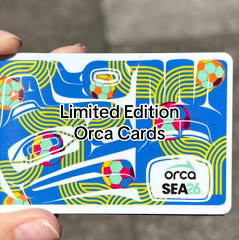
With hordes of soccer fans in Seattle for World Cup competition, the “site” seeing industry is in high gear. Even the public transit systems got into the act by releasing a limited-edition “SEA26” ORCA card created by Tlingit artist Alison Bremner. Her brilliant work, which ranges from totem poles to Starbucks coffee cups, makes the card a collector’s item. 

Much as I enjoy riding buses and appreciate Bremner’s design, I didn’t try to score one of the 27,000 cards. I have enough trouble keeping track of my plain white “SENIOR” card that declares “No Photo Required.” Apparently my wrinkled face is adequate qualification for the senior discount. 

ORCA is a clever marketing acronym based on Puget Sound’s beautiful and beloved orca, or “killer” whales. It’s “One Regional Card for All.” You can use a single card to ride buses, ferries, trains throughout a four-county region. 

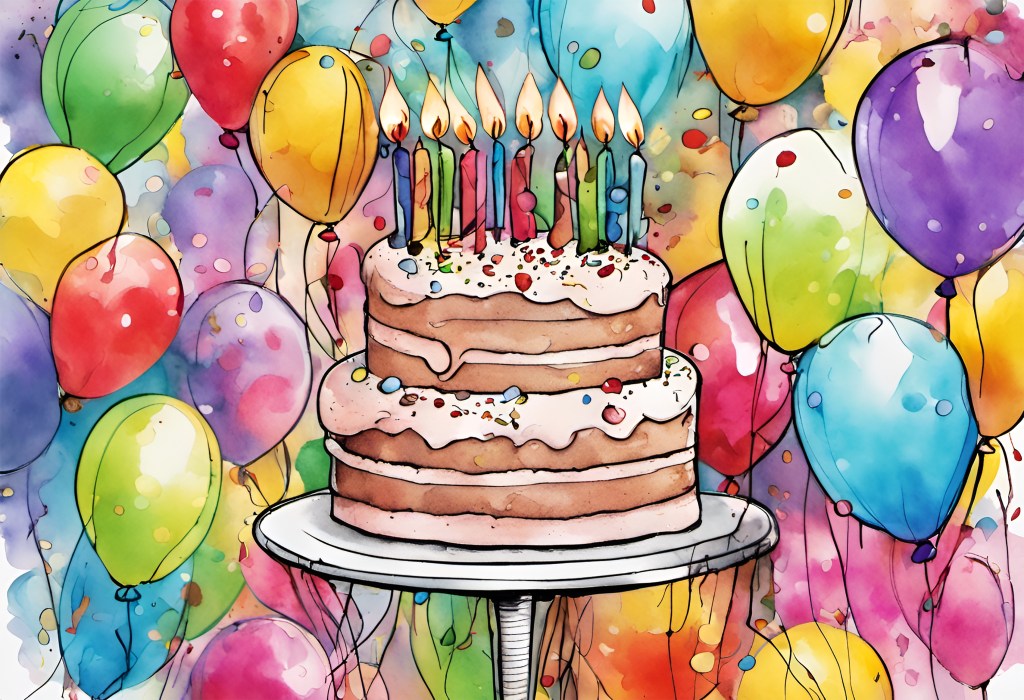
With more than two hundred routes just in the King County system, every once in a while I try a new one. Recently I was exploring Route 62, a zigzag journey that meanders north and east from historic King Street Station. You get glimpses of lakes Union and Green and close-up views of well-settled neighborhoods and business districts with intriguing shops and independent restaurants. After an hour or so the route concludes at Sand Point. The former Naval Air Station on the shores of Lake Washington is now home to the city’s second largest park, named for the late Sen. Warren G. Magnuson, who excelled at bringing home the bacon.

But like Route 62, I digress. On a recent Saturday, I boarded the bus and heard the satisfying “ping” as I tapped my card against the electronic reader. I was heading to the Good Shepherd Center in the lovely, lively Wallingford district. Located amidst lush grounds with arching, ancient trees, Good Shepherd was once a home for “wayward girls.” Now it’s a community center for education and arts. A writer friend, Elizabeth Clark Stearns, was premiering a one-act play, presented reader-theater style. 

The play was clever and put me in a good mood, even though the sky was spitting raindrops as I emerged. I walked briskly the few blocks to the bus stop and slipped my hand into my pocket for the ORCA card. Which wasn’t there. How could that be? I remembered distinctly slipping the card into my pocket after boarding the bus. I searched frantically through all my pockets and backpack. No card and really, no reason to panic. Yet I was distraught.

I boarded the bus and tried to slip a dollar into the cash receptacle. The bus driver handed me a receipt and explained the machine wasn’t working. I was getting a free ride! Even that small blessing didn’t calm me down. My reaction was visceral. My head was telling me everything was fine. The card’s replaceable. It could be worse. I could’ve lost my phone, or a credit card, or my entire wallet. Yet anxiety persisted in my gut.

“How did you lose it?” a friend later asked. I had no clue. In the week it took to get a replacement, I began to understand that the card means more to me than just a transit pass. It represents a paradox: both independence and interdependence. Giving up driving was my declaration of independence — from maintaining a car, insurance, gas, parking … all of it. I can still go pretty much everywhere I want, whenever I want. At the same time, I’m dependent on a community that uses and supports public transportation — a diverse group of folks, young and old, whose life styles and behaviors differ, sometimes in bizarre ways. 

There are more than a million ORCA cards out there. More than a million folks who are willing to get on a bus/train/ferry and join with others to get where they want to go. Very rarely, a passenger may be having a bad day. Even when it’s crowded, the norm is courtesy and consideration among my fellow passengers. The card represents membership in a special kind of club, a very inclusive one.

In exactly one week the replacement arrived in the mail. To celebrate, I headed to Third Avenue, where buses abound. I checked the schedule on my phone and sure enough, No. 62 was due. When it arrived, I put my hand in my pocket for the brand new ORCA card. Yes, dear reader. You’re ahead of me. It wasn’t there. 

Disbelieving, I looked down. There it was on the sidewalk. When I’d pulled out my phone, the ORCA card came along for the ride. Then it had fluttered, unnoticed, to the ground. Mystery solved. Now I know better. And it feels so good to belong to that inclusive club again.

Back in the Inclusive Club