
Happy Birth Day to me. Thirty thousand of them, in fact. As of today, June 30, 2026, I have been alive for thirty thousand days.
I turned eighty-two on May 12. Eighty-two is not a milestone birthday. Yet when we hit eighty, every doggone day is a milestone. With not a lot else to do on my birthday, I counted the days — including the extra ones in leap years. I realized that I was just a few weeks short of thirty thousand. There’s something numerically harmonious about hitting 30,000 on 6/30.
Statistically speaking, I shouldn’t even be here. The day I was born, in 1944, data at the time set my life expectancy at 66.8 years. Of course, I recall no expectations on the day of my birth other than to be fed and kept comfortable.
“Life expectancy” is just a nice euphemism so we can avoid saying the word “death” or “die.” According to a study by the National Institutes of Health, children don’t begin to understand mortality — the reality of death — until somewhere between age five and seven. Perhaps that’s when death denial enters our psyche. Or, as the oft-quoted comedian said, “I’m not afraid of death. I just don’t want to be there when it happens.”
Turns out, life expectancy has been a moving target all my life. At some point, Social Security determined that a woman born in 1944 would live to age seventy-two. Then, when I made it that far, I was given another 12.9 years. They’re going fast.
My financial advisor’s computerized analysis is measured, of course, in dollars. The analysis goes only as far as age ninety-two, which happens to be the age at which my mother died. The good news is, there’ll still be money in the bank, er, modest investment account that, as it happens, I inherited from her.
AI was willing to get specific about my life expectancy if I divulged personal information. I decided not to go there. Instead, I stumbled onto a website, my30K.com. The site claims that “A person only gets an average of 30,000 days on this earth and you’ve used more than you think.” (It gives no source for that seemingly arbitrary number. The Centers for Disease Control puts the average life expectancy for people in the U.S. at seventy-nine, though that varies widely depending on gender and other demographics. Still seventy-nine adds up to way less than 30,000 days.)
The website asks for your birth date and immediately tells you how many days you’ve used up. I was pleased that my count matched theirs. I was invited to enter my email address so that every day I’d receive a notification counting down (or up?) my days. Again, I think not.
I don’t need or even want to know how much longer I can expect to live. When I do think about death I recall a spiritual my high school choir sang: “I wanna die easy when I die.” The older I get, the more often I hum it.
When I was on the staff of Holden Village, a retreat center in Washington’s North Cascade Mountains, we participated in a morning prayer liturgy. One of the prayers gave thanks that “today is not our last day.” I — and other staff members — would raise our eyebrows and ask each other later, “How do we know so early in the morning that it’s not our last day?”
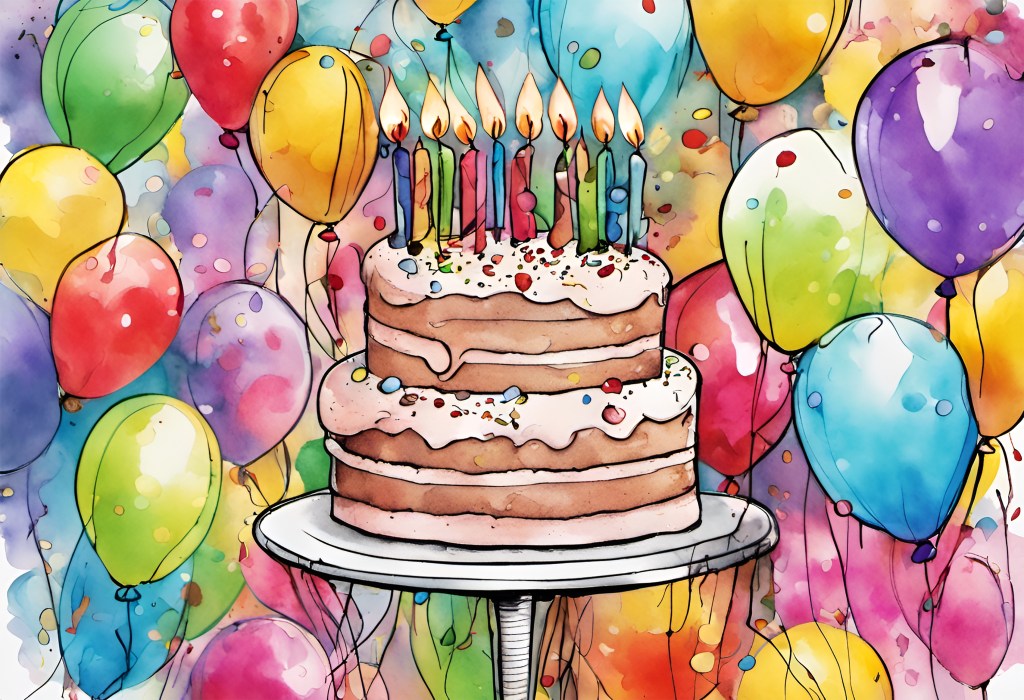
All I know is that today, like the 29,999 days that came before, is a blessing and a bonus. As soon as I hit the “send” button on this bit of musing, I plan to walk the three blocks to Sugar Bakery on Madison Avenue. I shall have my cake and eat it, too.


Mary,
You consistently offer a fresh and compassionate perspective — thank you.
I especially appreciate your approach to counting the days, and making the days count.
Happy Birthday. Enjoy the cake, every darn day!
LikeLike
Thanks for reading. The cake was lemon almond, sweet and delicious!
LikeLike
Happy Birthday Mary and Happy 30,000 Days — may you be honored with many more trips around the sun ☀️ !!
Please know that Erik and I love you, your heart, humor, and spirit. God bless you always!!
~ Susan Swanson
LikeLike
The Moody Blues have a song, <em<Twenty-Two Thousand Days, about normal, anticipated life expectancy, but improved medical support, and good genes, has stretched the average. Congratulations!! My 82nd birthday approaches in about three months. I have to go back for retesting for my drivers’ license. I worried, but passed with ease two years ago, so I guess my position as chauffeur is still secure. 😉 😀 😎
LikeLike