
“Your vote will be counted.”
The email from King County Elections just before our Aug. 4 primary election was especially reassuring amidst all the furor these days over voting. I’d done my homework: attended voters’ forums, read endorsements and candidates’ statements. I was ready when my ballot arrived in the mail. I quickly filled it out and returned it — forgetting to sign the enclosure envelope. Turns out, that is not a minor detail.
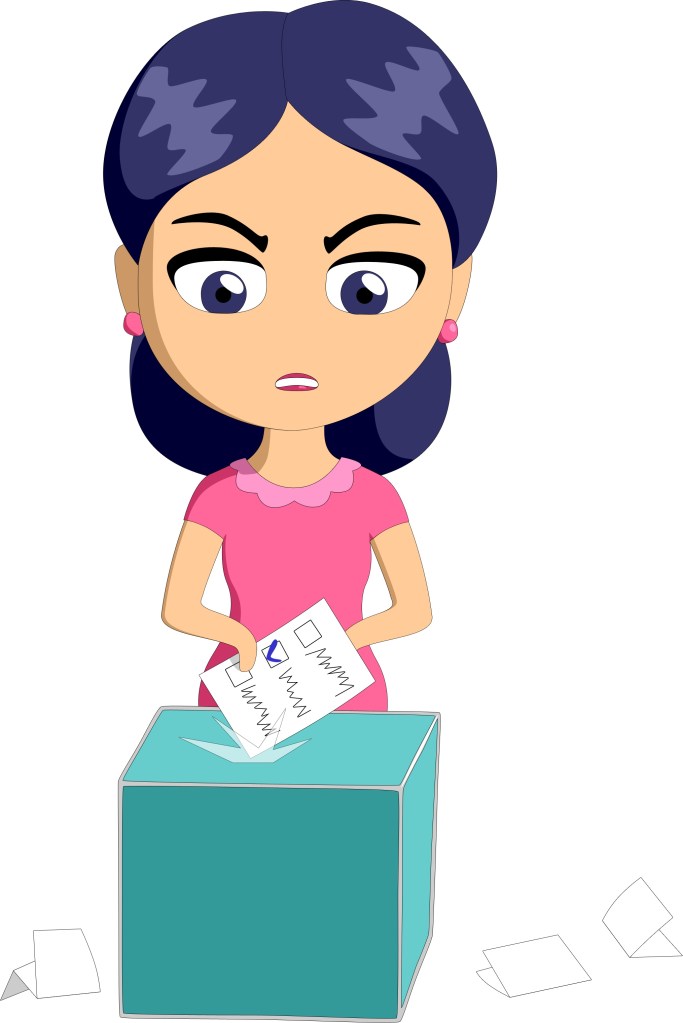
I’d been in a rush to mail back the ballot after learning some years ago not to trust the USPS with timely delivery. Shortly after Washington state turned to all vote-by-mail, I’d dropped off my ballot at the post office the day before an election deadline. I was stunned the next week when the elections deputy in rural Okanogan County (where I lived) called to report my ballot was invalid. Seems my small town post office no longer postmarked the mail. My ballot had been sent to a distribution center a hundred miles away, where it was postmarked too late.
The elections clerk was sympathetic. (As I mentioned, it’s rural — pretty much everyone knows everyone.) The election was for a school levy. She knew I’d campaigned for it. Fortunately, the measure passed, assuaging my vexation. From then on, I placed my ballot in an official drop box at city hall, an easy walk from my home. Ironically, now that I live on densely populated First Hill in Seattle, there is no ballot drop box within easy walking distance. Hence my determination to overcome USPS sluggishness — or whatever is going on.
King County Elections, on the other hand, was anything but sluggish. Almost immediately after I received a text that my ballot had arrived, I received another text saying there was a problem. It included instructions on what to do next. Before I could even act, I received an email. Then I received a letter. On top of that, when I called, I did not get sent to the limbo of “hold.” I was immediately in touch with a living, friendly, helpful human being. It was not too late to sign the ballot, which I did, hence the affirming email.
My enthusiasm for voting began when my third-grade teacher, the creative Miss Bogue, gave her students an opportunity to “vote” in the presidential race between Dwight D. Eisenhower and Adlai Stevenson. Miss Bogue honored my best friend, Jeanette, and me with the task of tallying the votes.
I suspect we eight-year-olds were minimally aware of policy issues but maximally aware of our parents’ leanings. My parents were solidly in the I-like-Ike camp. Jeanette’s were keen on Stevenson, who I thought seemed less genial. He didn’t have Ike’s grandfatherly twinkle.
Jeanette’s job was to read the name on each “ballot” aloud while I applied a solid check mark next to the respective candidate’s name. As Ike began to emerge victorious, Jeanette’s voice reflected increasing irritation. With every “Ike” like, she’d slam the offending ballot back onto the table. Funny that memory remains so clear all these decades later. Perhaps it’s because decades of voting have given me empathy for her frustration.
I’m a nonpartisan voter, not only because of my years as a journalist but because I prefer choosing candidates and issues on their merits, not by party. I’m frequently on the losing side. Worse, there’ve been times I wished I could retract my vote. A good campaigner turned out to be inept at governing, or an initiative that sounded wise at the time resulted in undesirable side effects — like Washington’s money-infected initiative process itself.
The current fracas over mailed ballots has residents in my retirement community concerned. Given a green light by local election officials, they’re figuring out a way to deliver ballots directly and securely to drop boxes. Their goal is to skip the USPS, which most residents — including me — would otherwise depend upon.
That school levy election years ago and this year’s angst are reminders of how much the privilege of voting matters to me. I’m reminded of my late mother, who was born four years before the 19th Amendment gave women the power to vote. At a very late age, she finally had the chance to vote for a woman candidate for President. That was in a primary election. Because of Washington’s weird partisan rules, she was advised by a friend that her primary vote didn’t really matter.
“It does to me,” declared my mom.
Dear reader, if you’ve come this far with me, I suspect your vote matters to you, too. Let us cherish and protect our franchise.



You must be logged in to post a comment.