
 Time out. Yesterday, within the span of eight hours, two of my friends became widows. I’ve been posting daily stories about stuff I’m hanging onto. Yet sometimes the universe—God, if you will—insists that we let go. It feels appropriate to spend this day pondering that.
Neither man’s death was a surprise. For years, both had journeyed the grueling road of occasional hope and frequent despair that accompanies cancer treatment. For both, when all possibilities of cure had been eliminated, death came mercifully soon. Both leave a legacy of service in our community with a resulting vacuum that is felt deeply.
David Lindeblad was a professor, beloved by students and colleagues, a supporter of the arts, a fierce advocate of community solidarity, generous with time, talent, and treasure. His patient determination bespoke of the skilled fly fisher that he was.
Richard Ries came to Okanogan County in 1981 to run the IT department at the county courthouse. His work as a public servant was augmented, perhaps even outstripped, by his years of volunteer labor on behalf of the arts and the county historical society.
David’s wife Betty and Richard’s wife Marilyn are powerful forces in their own right. They were champions in helping their husbands navigate and endure the medical maze. They will not be alone as they grieve. This community has a way of showing up when needed. People call and ask, “How can we help?” Sometimes there are small ways to help, but there’s no way to help with the letting go part, no way to fill the hole in the heart. We have to let go of the ones we love, but we never let go of the love itself.
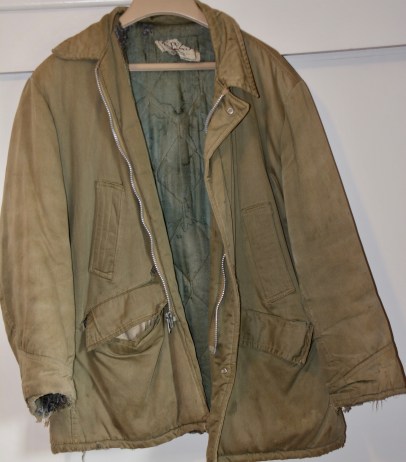 I wrote about my late husband’s barn jacket a number of years ago when I was adjusting to widowhood. I explained how I tried to sell the jacket for fifty cents in a yard sale and, when there were no buyers, how I paid to have it dry-cleaned, thinking it would come out looking less disgusting. It didn’t.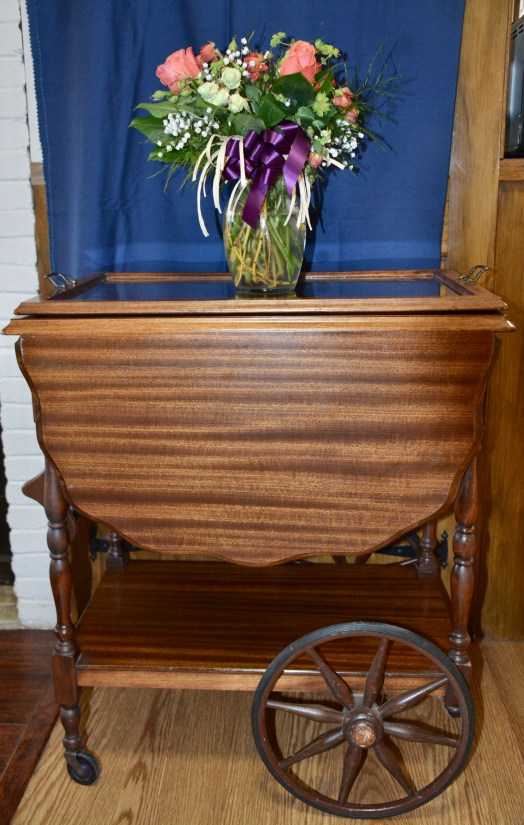
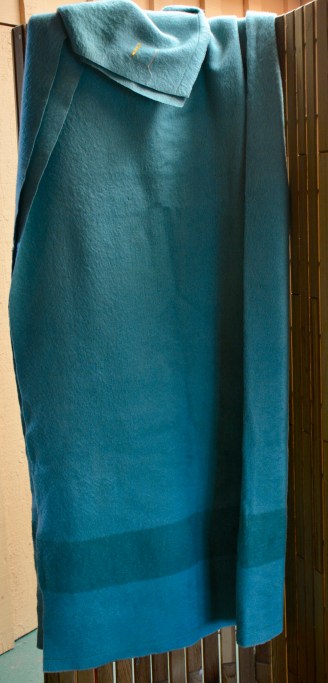 It’s one hundred percent wool, a Hudson’s Bay blanket that at one time had the distinctive store label and binding in satin. More than eighty years old, it’s the kind of thing most people would repurpose as the dog’s bed. For me it is sacred. I was sure I was conceived under this blanket.
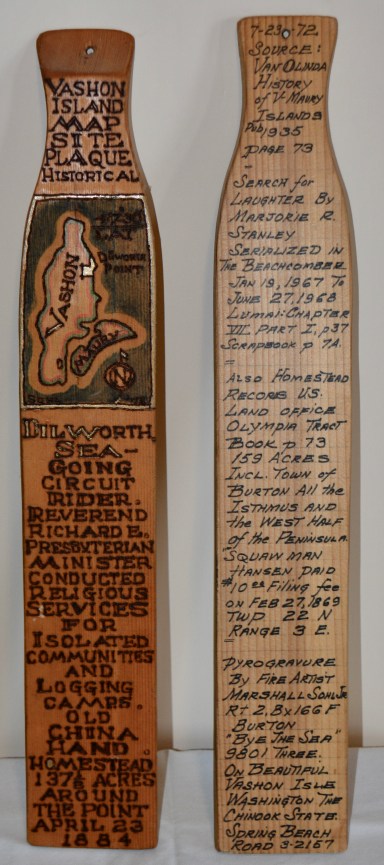 These odd-looking paddles are among the very few artifacts I’ve kept from the ten years I lived on Vashon Island in Puget Sound. It was a formative decade, starting at age 25. I ended a marriage by mutual agreement, discovered my vocation at last, made lifelong friendships, played in a funky bluegrass band, and learned to sail. I should say, I learned to crew on sailboats. The few times people sailed with me at the rudder, they tended to decline a repeat voyage.
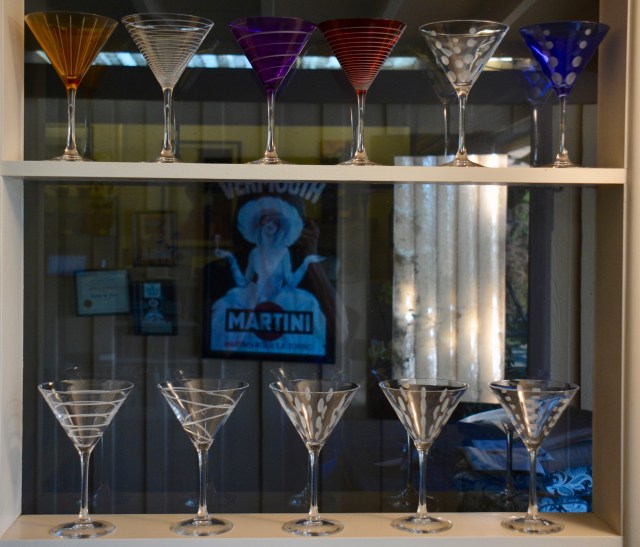 My friends and family consider me the Martini Doyenne of Omak, WA. I don’t think there’s much competition for the title.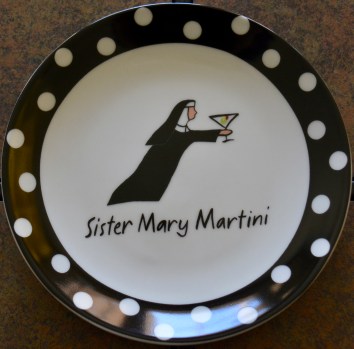
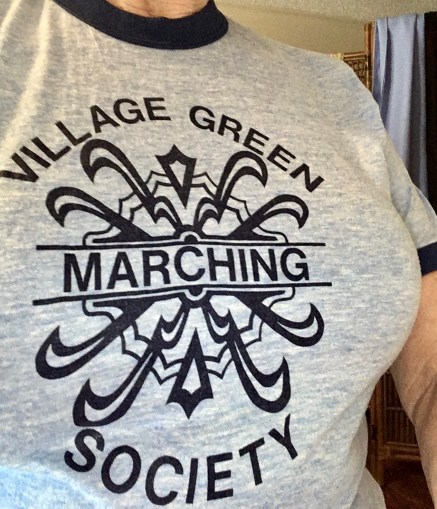 I rarely wear T-shirts for the same reason I rarely take selfies: I’m rarely happy with how they look. Nonetheless, I have three of these shirts tucked away in a drawer. Maybe, just maybe, I could have a reason to wear them again someday.
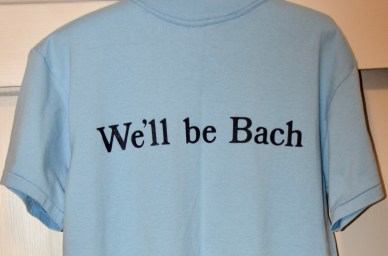 I played flute and piccolo; my husband played baritone horn. The band had a wide-ranging repertoire. Favorites were “I Love To Go A-wandering,” “Yankee Doodle Dandy,” and “The Stripper.” During the latter, one of the kazoo players would unleash a cascade of bubbles from an ornate bubble blower.

You must be logged in to post a comment.