
My Christmas amaryllis has experienced a trauma while in its prime. In fact, my entire household experienced a middle-of-the-night trauma, but only the amaryllis suffered irreversibly.
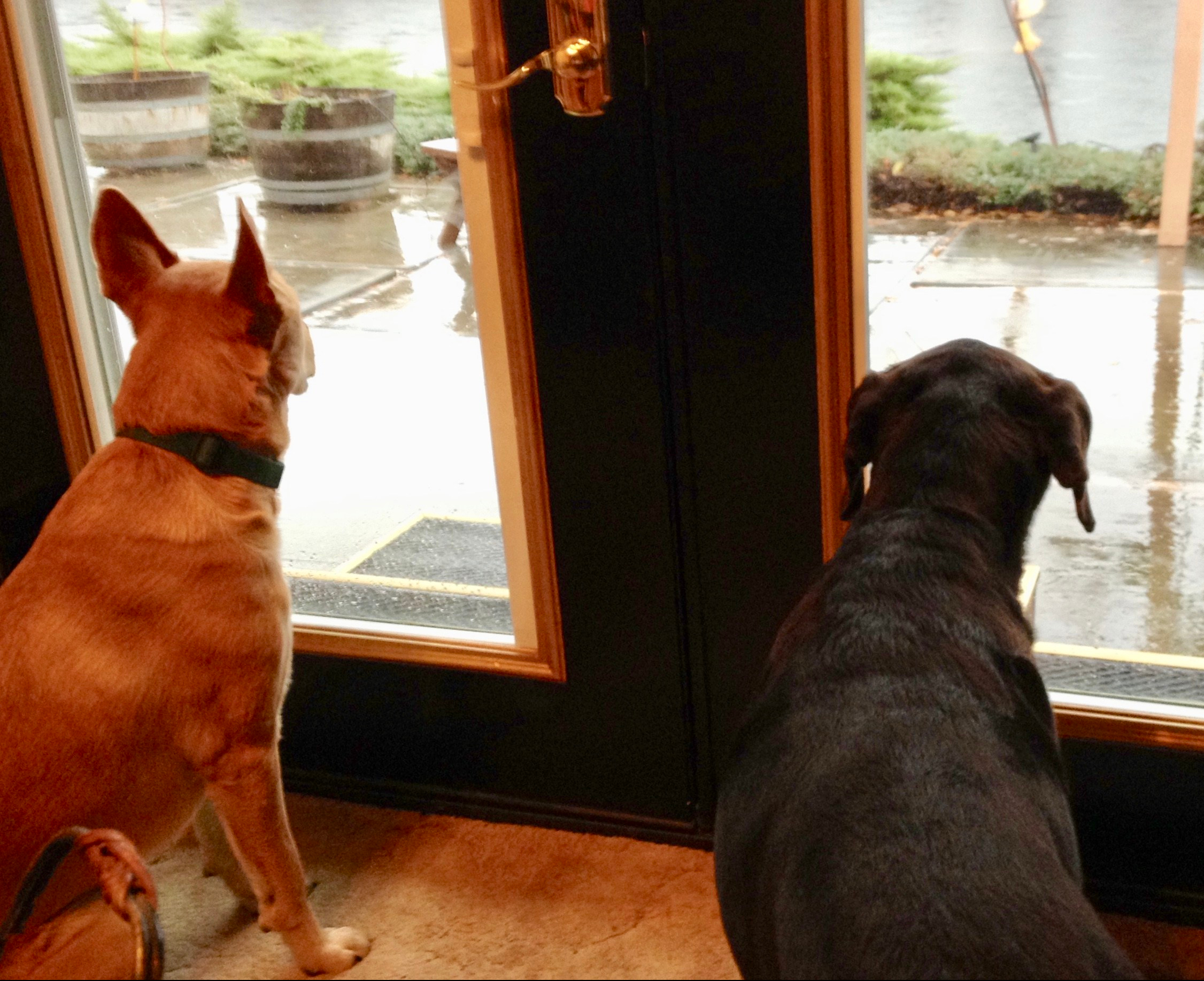
A loud thud awakened me from a deep sleep. When I got up to investigate and opened my bedroom door, I was met by my two frightened dogs who appeared ready to leap into my arms at sixty pounds apiece. Ordinarily, the dogs sleep outside. Their kennels have heated pads and are out of the weather. But this cold spell has melted my heart. Every night I bring them and their cushioned beds inside.
Still half-asleep, I found a light switch and discovered my antique organ—the kind traveling missionaries folded up and carried in their wagons for church services—had collapsed. My peace plant, which was sitting on the organ, landed in one of the dog beds. Various other items that’d been on the organ were scattered about. I managed to wake up just enough to right the plant, sweep most of the dirt out of the dog bed, and convince the dogs we could all go back to sleep now. Which I at least did. Tawny, the younger dog, is still exhibiting signs of PTSD.
By morning, I’d forgotten all about the incident until I again opened my bedroom door. There was the little organ in a most undignified position, its nether parts fully exposed. Most astonishing, the amaryllis—which was on a table a couple feet away from the accident scene—had been decapitated, apparently by flying debris. A long stalk rose from its pot like a flagpole robbed of its banner. Its five blossoms lay on the table—still resplendent, but how long could they survive without bulb and stem?
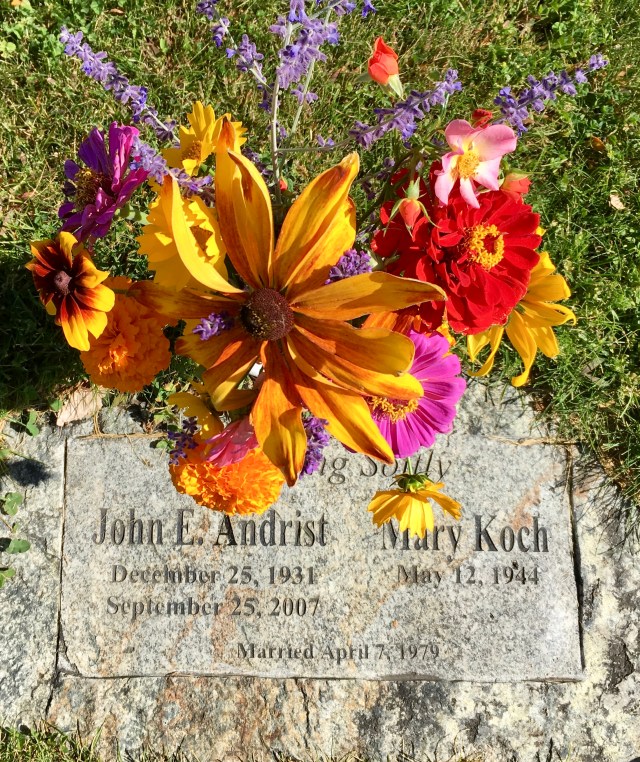
I put them in a glass with water. Slowly, one withered away, and then another. By Valentine’s Day, three viable blooms remained. I decided they’d be an appropriate love memento to place on my husband’s grave. Thus the dogs, the blooms, and I set out on that miserably cold and windy day. I allow the dogs to run off-leash in the cemetery if no one else is around. No one else was crazy enough to venture out that day. A vicious north wind blew snow in my face, my fingers were numb even inside my mittens, and my dogs scampered freely through the snow.
I generally like to read a poem when visiting the gravesite. Given the weather, I needed something short. These lines from a traditional Scottish poem seemed right:
From ghoulies and ghosties
And long-leggedy beasties
And things that go bump in the night,
Good Lord, deliver us!
 I laid the amaryllis blossoms on John’s (and someday my) headstone and fled back to the shelter of my car. Back home, the amaryllis’s second stalk has produced another three blooms with possibly two more to come. Good Lord, deliver them!




 For long minutes stretching into eternity, I stared at the grocery store shelf, paralyzed by indecision, conflicted in a war of values. Finally I grabbed a bottle of apple cider vinegar and fled to the next aisle, where my dilemma would only deepen.

You must be logged in to post a comment.